Tell us about the job
Takes about a minute. No obligation.
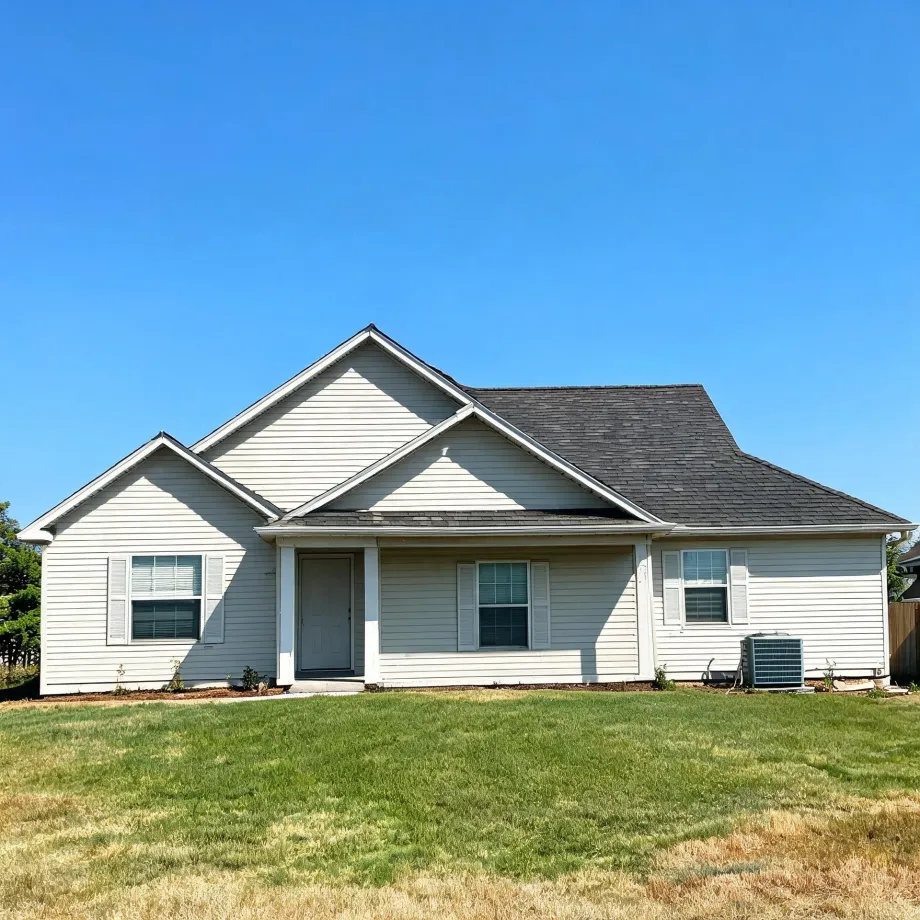
A contractor quoting central AC repair here has to settle one question before anything else: whether the compressor ever ran long enough to wear out. Homes in Kootenai County, ID have essentially no cooling season — no month of the year is warm enough to call for it. Compressor contacts, capacitors, and condenser fans accumulate wear through starting cycles, and a system that barely runs accumulates almost none. A part that has given out here gave out sitting still, or it had a defect from the start, and that distinction changes what gets replaced and what gets left alone.
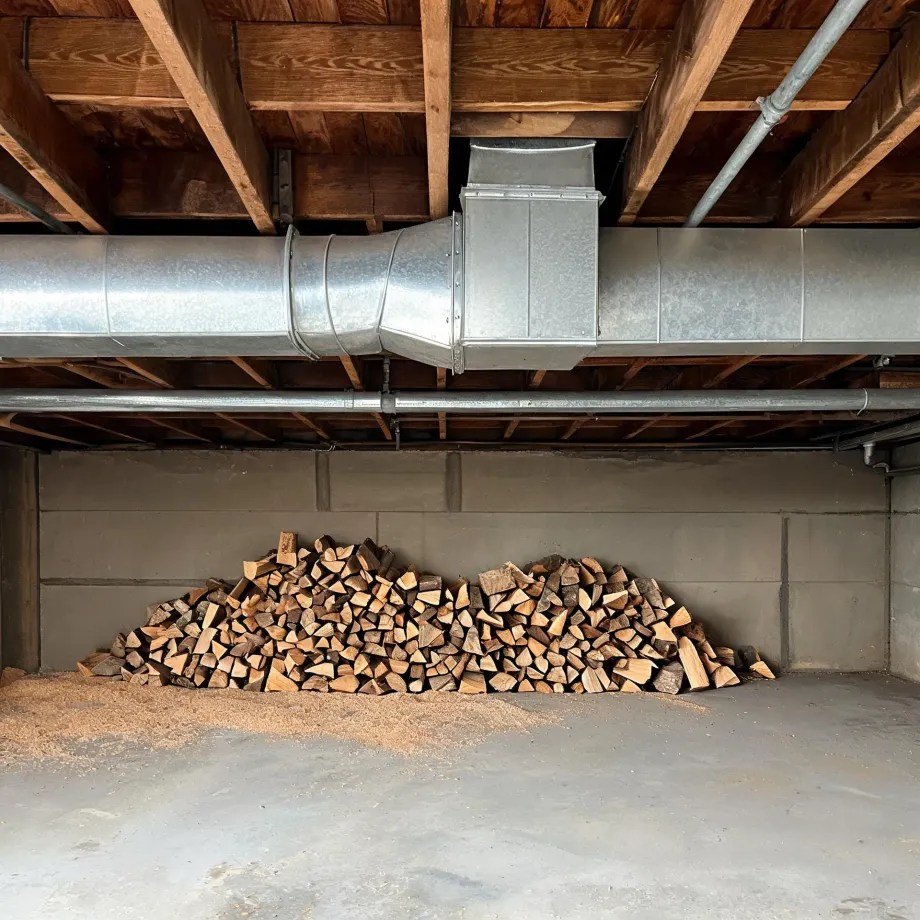
Parts are where repair jobs in this county get complicated. Half the homes in Kootenai County, Idaho were built in 1996 or earlier (2020-2024 ACS 5-year). A system running in a house that old may have been swapped in or upgraded at some point, but the refrigerant lines, the air handler configuration, and the way the system was originally plumbed often reflect that earlier build. When a contractor opens the equipment and identifies what failed, the next question is whether the replacement part is still in production. For components tied to older refrigerant types or discontinued product lines, it frequently is not, and that turns a straightforward repair into a longer conversation about what comes next.
The Parts of a Central AC a Contractor Checks First
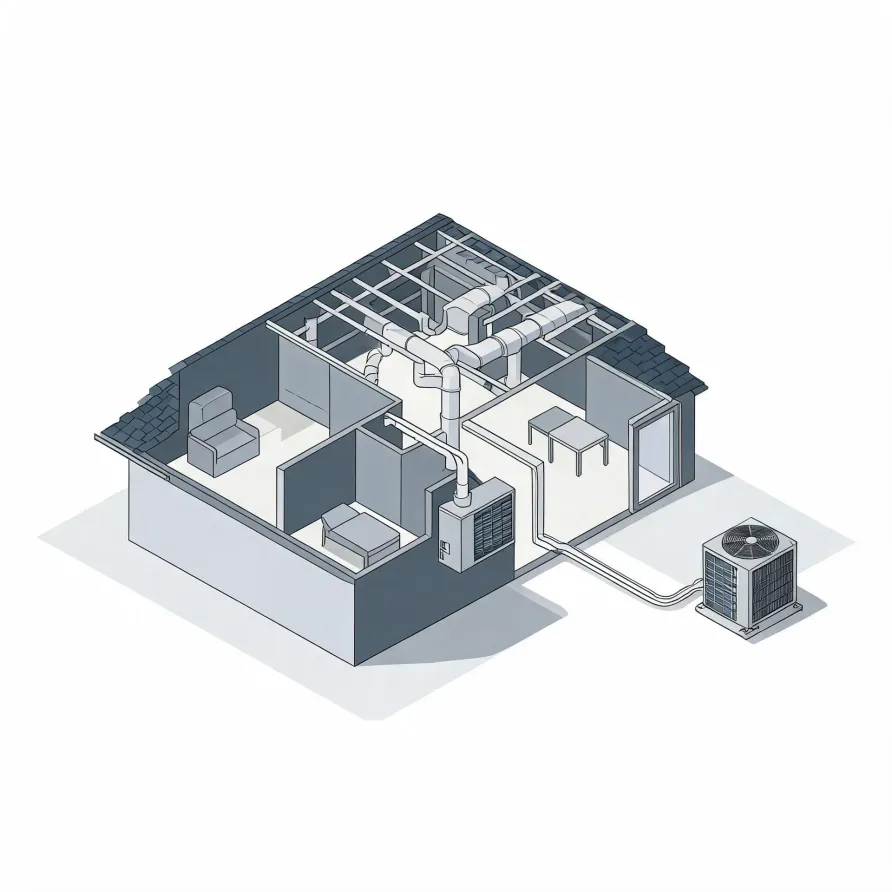
The outdoor condenser unit sits outside the house, usually on a concrete pad at the side or rear, and it carries the compressor and the condenser coil. These are the parts a contractor reaches first when the system stops cooling, because a failed compressor or a fouled condenser coil is often where the problem lives.
Inside the house, the air handler holds the evaporator coil and the blower fan, and it sits in a utility closet, attic, or basement. The refrigerant line set runs between the two units, and the thermostat on a wall inside the living space is what tells the whole system when to run and when to stop.
The drawing shows a typical layout, and a licensed contractor determines which components apply to your specific house and what each one needs.
Find a contractor in Kootenai CountyKootenai County, by the numbers
730 severe weather events were recorded in Kootenai County, Idaho between 2015 and 2024.
NOAA National Centers for Environmental Information, Storm Events Database, bulk CSV export, events 2015-01-01 through 2024-12-31.Half the homes in Kootenai County, Idaho were built in 1996 or earlier (2020-2024 ACS 5-year).
U.S. Census Bureau, 2020-2024 American Community Survey 5-Year EstimatesKootenai County, Idaho holds 80,260 housing units (2020-2024 ACS 5-year).
U.S. Census Bureau, 2020-2024 American Community Survey 5-Year EstimatesOwners occupy 71.3% of the occupied homes in Kootenai County, Idaho (2020-2024 ACS 5-year).
U.S. Census Bureau, 2020-2024 American Community Survey 5-Year EstimatesRules & Standards Behind Central AC Repair in Kootenai County, Idaho9 sourced rules and standards
What the repair visit looks like
Split-system central air conditioners rated below 45,000 Btu/h manufactured on or after January 1, 2023 must meet a federal minimum of 13.4 SEER2.
Split-system central air conditioners rated at or above 45,000 Btu/h manufactured on or after January 1, 2023 must meet a federal minimum of 13.4 SEER2.
Split-system central air conditioners manufactured between January 1, 2015 and December 31, 2022 had to meet 13 SEER, the metric that preceded SEER2.
Single-package central air conditioners manufactured on or after January 1, 2023 must meet a federal minimum of 13.4 SEER2.
Space-constrained central air conditioners manufactured on or after January 1, 2023 must meet a federal minimum of 11.7 SEER2.
Federal efficiency standards for split-system central air conditioners and heat pumps are set on each certified combination of outdoor unit and indoor coil rather than on the outdoor unit alone.
Residential and light commercial air conditioning and heat pump systems assembled in the field, including mini-splits and unitary systems, may not be installed on or after January 1, 2025 using a refrigerant with a global warming potential above 700.
A field-assembled system whose specified components were all manufactured or imported before January 1, 2025 carries no installation compliance date under the refrigerant restrictions and may still be installed.
Licensing and Legal Requirements in Kootenai County, Idaho
Idaho requires a state certificate of competency for heating, ventilation and air conditioning work: it is unlawful to engage in the business, trade or practice without passing the examination and holding the certificate.
Severe Weather Events in Kootenai County, Idaho
Weather puts hours on HVAC equipment. The more a system works to recover from extreme conditions, the more wear it carries into the next season, and that wear is what repair calls are made of.
730 severe weather events, 2015–2024. Source: NOAA National Centers for Environmental Information, Storm Events Database.