
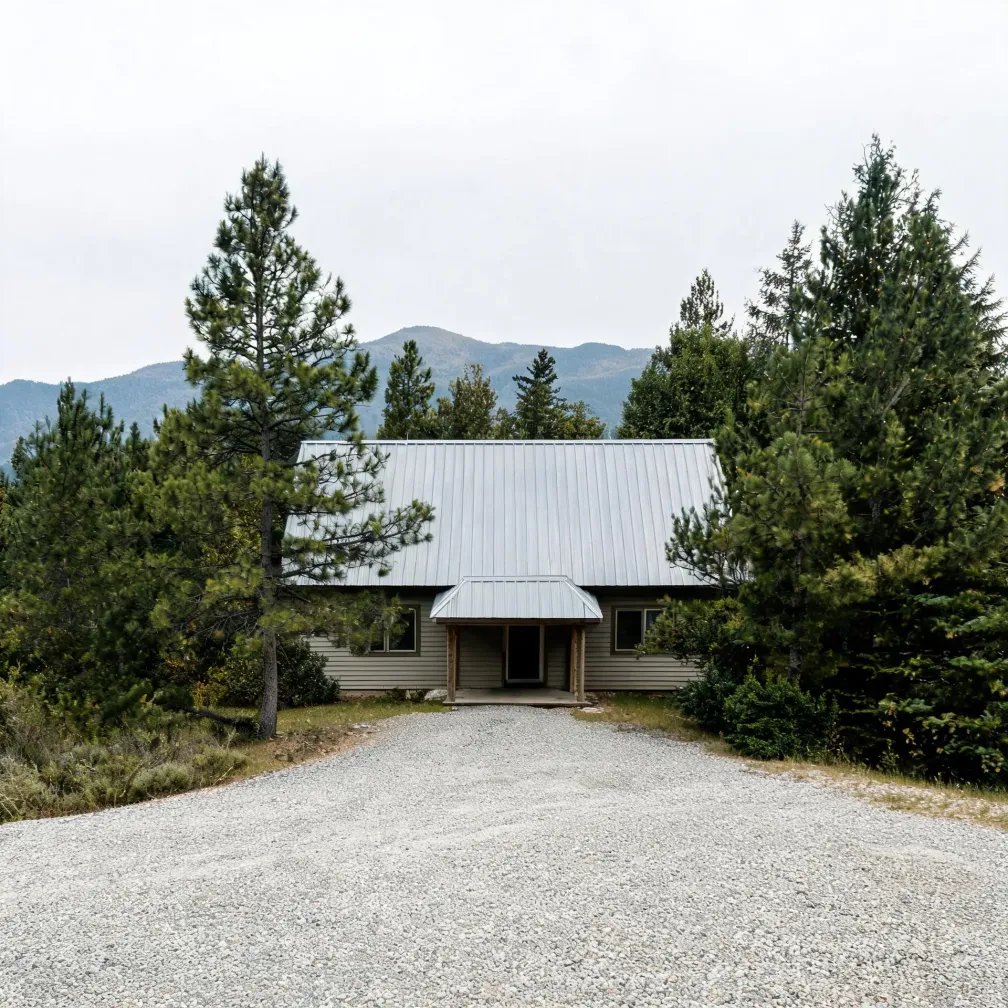
What Idaho homes are up against.
NOAA National Centers for Environmental Information, Storm Events Database, bulk CSV export, events 2015-01-01 through 2024-12-31. · U.S. Census Bureau, 2020-2024 American Community Survey 5-Year Estimates

A compressor that runs for only a short stretch each year still degrades, but the degradation stays quiet. Homes in Idaho run cooling about two months a year, from July through August. Contactors wear from cycling, refrigerant slowly migrates, and capacitors weaken whether the unit is running or parked. The difference is that a fault in a long-running system tends to announce itself mid-season, when a contractor can still schedule around it. A fault in a system that sits most of the year holds until the first week the house actually needs cooling, which is the same week every other homeowner calls. The installation quality a contractor brings to the job determines how much of that idle period the equipment can absorb before it shows.
Before a contractor can size a new system, they have to confirm what the existing ductwork moves and what the electrical service can handle. Neither can be assumed from a visual walk-through. Half the homes in Idaho were built in 1991 or earlier (2020-2024 ACS 5-year). That means a significant share of houses across the state were built under different load calculations and wiring standards than a modern install requires. Ducts that served one specification often need rebalancing or resizing for a different one. The electrical panel gets checked, not assumed. Every one of those steps shapes the quote.
Does your county put extra stress on your HVAC system?
2015–2024 · Source: NOAA National Centers for Environmental Information, Storm Events Database.
A condenser sitting outside faces wind, hail, driving rain, heavy snow loads, and temperature swings that can stress refrigerant lines, bend fins, and cut into a system's output over time. A unit sized or positioned without accounting for those conditions will work harder than it should, wear faster, and cost more to run. The contractor you are matched with knows how to spec and place equipment for what Idaho weather actually delivers at your address.
Idaho HVAC Installation and Repair License Requirements
Idaho sets its own rules for who can perform HVAC installation and repair work, and the provisions below are drawn directly from state sources rather than paraphrased.
Idaho requires a state certificate of competency for heating, ventilation and air conditioning work: it is unlawful to engage in the business, trade or practice without passing the examination and holding the certificate.
A state license requirement means that only contractors who have met Idaho's credentialing standards are legally permitted to do this work in your home. That matters when you are deciding who to trust with the job. The contractors this site routes requests to hold the license these provisions describe, and that filter applies before any request moves forward.
View the source provisions1 provisions
Idaho requires a state certificate of competency for heating, ventilation and air conditioning work: it is unlawful to engage in the business, trade or practice without passing the examination and holding the certificate.