Tell us about the job
Takes about a minute. No obligation.

A central AC system in Lemhi County spends almost its entire life waiting. Homes in Lemhi County, ID have essentially no cooling season — no month of the year is warm enough to call for it. Compressors that sit idle for years develop failed start capacitors and sticky contactors before they ever log meaningful runtime, and refrigerant seals can dry and crack without the pressure cycles that would otherwise keep them conditioned. When a homeowner calls because the system will not start, the contractor is less often tracing compressor fatigue and more often finding components that gave out on the shelf. That changes which parts get priced first.
Ductwork laid down for one generation of equipment carries the fingerprints of whatever system it was first built around, and in Lemhi County that gap between original installation and what runs today is wide enough to matter on a repair call. Half the homes in Lemhi County, Idaho were built in 1979 or earlier (2020-2024 ACS 5-year). When a contractor opens a unit here, what decides the job is whether the parts that system takes are still in the supply chain. Older refrigerant fittings, proprietary blower assemblies, and control boards for discontinued platforms are not always available on short order, and that shapes both the repair timeline and what the contractor puts in front of the homeowner.
The Parts of a Central AC a Contractor Checks First
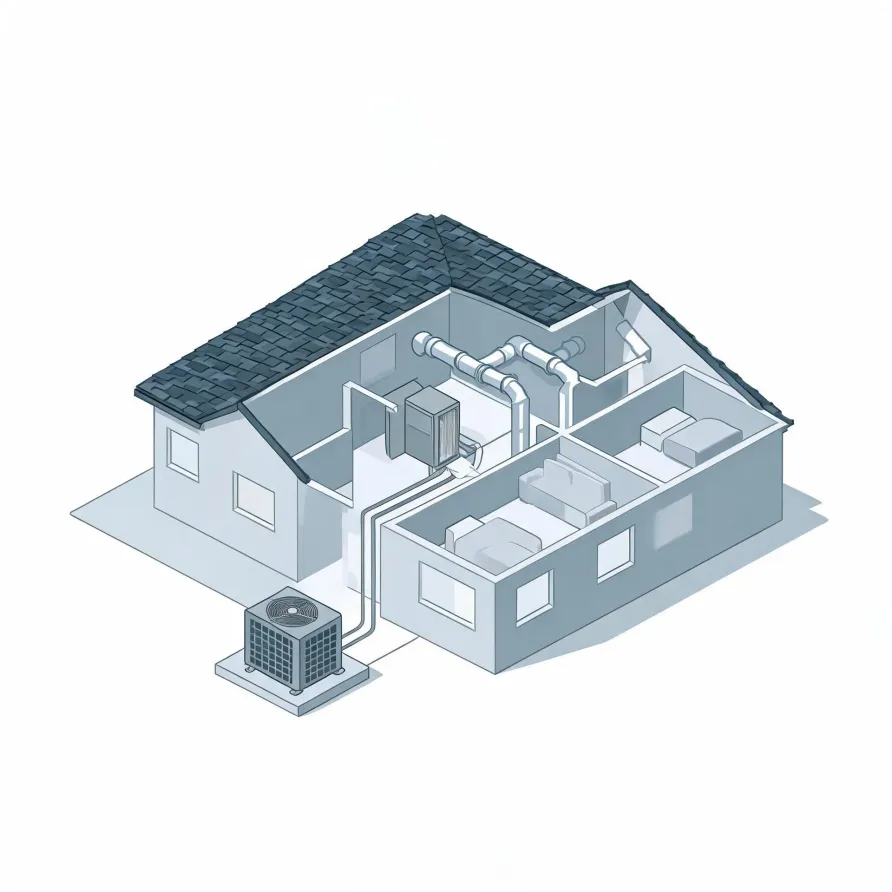
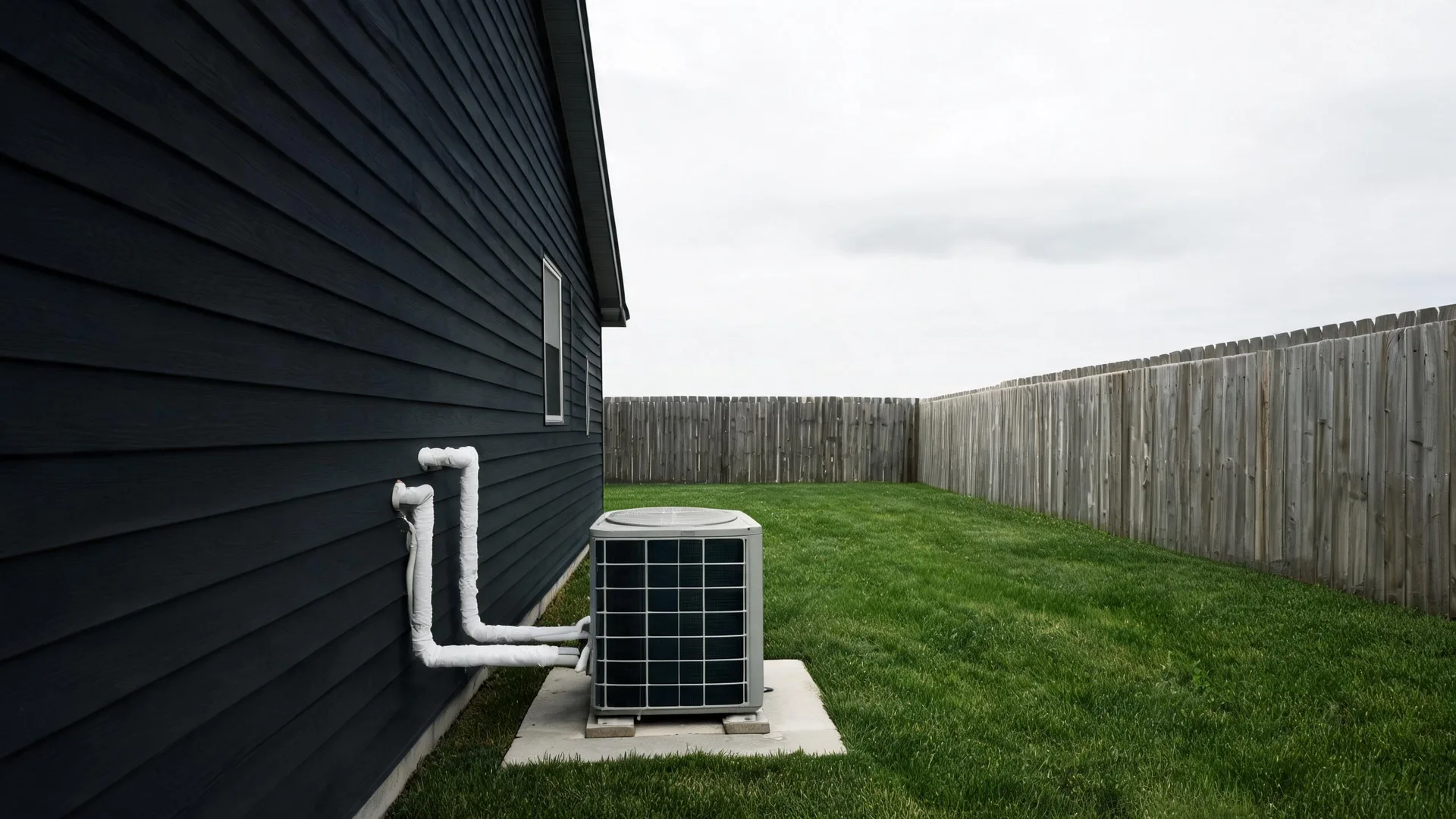
The outdoor condenser unit sits on a pad beside the house and holds the compressor and condenser coil. These are the pieces a contractor reaches first when a system stops cooling, runs constantly, or makes noise it should not. The compressor drives the whole process, and a failed one is a common reason a system quits outright.
Inside the house, the air handler or furnace cabinet holds the evaporator coil and the blower. The evaporator coil is where refrigerant does its work, and a frozen coil or a refrigerant leak typically shows up here. The blower moves conditioned air into the duct system, and a weak or failed blower will cut airflow to every room it serves.
The drawing shows a standard layout, and a licensed contractor determines which components apply and what condition they are in for your specific home.
Find a contractor in Lemhi CountyLemhi County, by the numbers
44 severe weather events were recorded in Lemhi County, Idaho between 2015 and 2024.
NOAA National Centers for Environmental Information, Storm Events Database, bulk CSV export, events 2015-01-01 through 2024-12-31.Half the homes in Lemhi County, Idaho were built in 1979 or earlier (2020-2024 ACS 5-year).
U.S. Census Bureau, 2020-2024 American Community Survey 5-Year EstimatesLemhi County, Idaho holds 4,676 housing units (2020-2024 ACS 5-year).
U.S. Census Bureau, 2020-2024 American Community Survey 5-Year EstimatesOwners occupy 79.3% of the occupied homes in Lemhi County, Idaho (2020-2024 ACS 5-year).
U.S. Census Bureau, 2020-2024 American Community Survey 5-Year EstimatesRules & Standards Governing Central AC Repair in Lemhi County, Idaho9 sourced rules and standards
What the repair visit looks like
Split-system central air conditioners rated below 45,000 Btu/h manufactured on or after January 1, 2023 must meet a federal minimum of 13.4 SEER2.
Split-system central air conditioners rated at or above 45,000 Btu/h manufactured on or after January 1, 2023 must meet a federal minimum of 13.4 SEER2.
Split-system central air conditioners manufactured between January 1, 2015 and December 31, 2022 had to meet 13 SEER, the metric that preceded SEER2.
Single-package central air conditioners manufactured on or after January 1, 2023 must meet a federal minimum of 13.4 SEER2.
Space-constrained central air conditioners manufactured on or after January 1, 2023 must meet a federal minimum of 11.7 SEER2.
Federal efficiency standards for split-system central air conditioners and heat pumps are set on each certified combination of outdoor unit and indoor coil rather than on the outdoor unit alone.
Residential and light commercial air conditioning and heat pump systems assembled in the field, including mini-splits and unitary systems, may not be installed on or after January 1, 2025 using a refrigerant with a global warming potential above 700.
A field-assembled system whose specified components were all manufactured or imported before January 1, 2025 carries no installation compliance date under the refrigerant restrictions and may still be installed.
Licensing and Legal Requirements in Lemhi County, Idaho
Idaho requires a state certificate of competency for heating, ventilation and air conditioning work: it is unlawful to engage in the business, trade or practice without passing the examination and holding the certificate.
Severe Weather Events in Lemhi County
Weather puts hours on HVAC equipment. Storms, temperature swings, and hard-use seasons all show up later as wear that contractors diagnose and repair, which is why local weather history belongs on a page about keeping central AC running in Lemhi County.
44 severe weather events, 2015–2024. Source: NOAA National Centers for Environmental Information, Storm Events Database.