Tell us about the job
Takes about a minute. No obligation.
Homes in Gooding County, ID run cooling about two months a year, from July through August. A compressor that has stood off since late summer and then fails on its first start of the next season is not carrying years of accumulated cycling wear. The contactor, the capacitor, and the refrigerant seals are the parts a contractor checks first, because those are the components that degrade during long idle periods rather than under load. A system that runs hard for only a couple of warm months rarely wears out from overwork, so a repair quote that points to runtime as the cause deserves scrutiny.
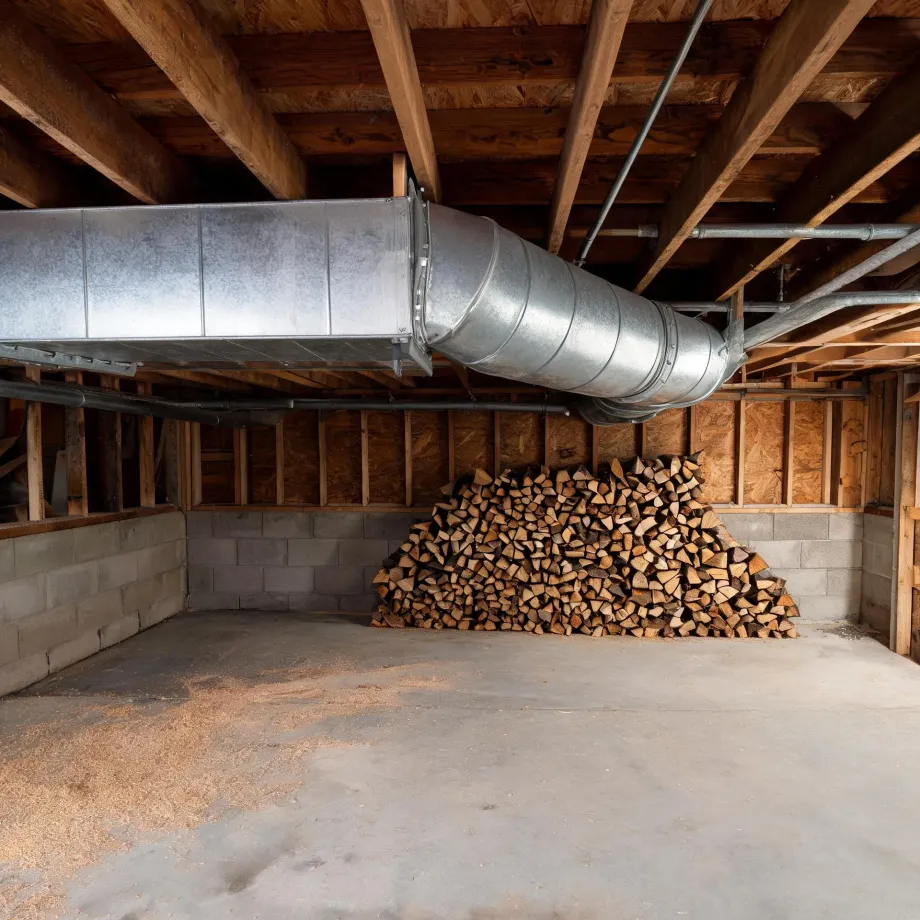
Ductwork laid in for an earlier generation of equipment has been adapted and re-adapted since, and the refrigerant lines, the air handler connections, and the sealed components inside the unit reflect that layered history. Half the homes in Gooding County, Idaho were built in 1976 or earlier (2020-2024 ACS 5-year). When a system opens up, what decides the repair is whether the part it needs still has a supply chain behind it. Older compressors, certain metering devices, and proprietary control boards can be obsolete, which turns a straightforward fix into a sourcing problem before it is anything else.
The Parts of a Central AC a Contractor Checks First
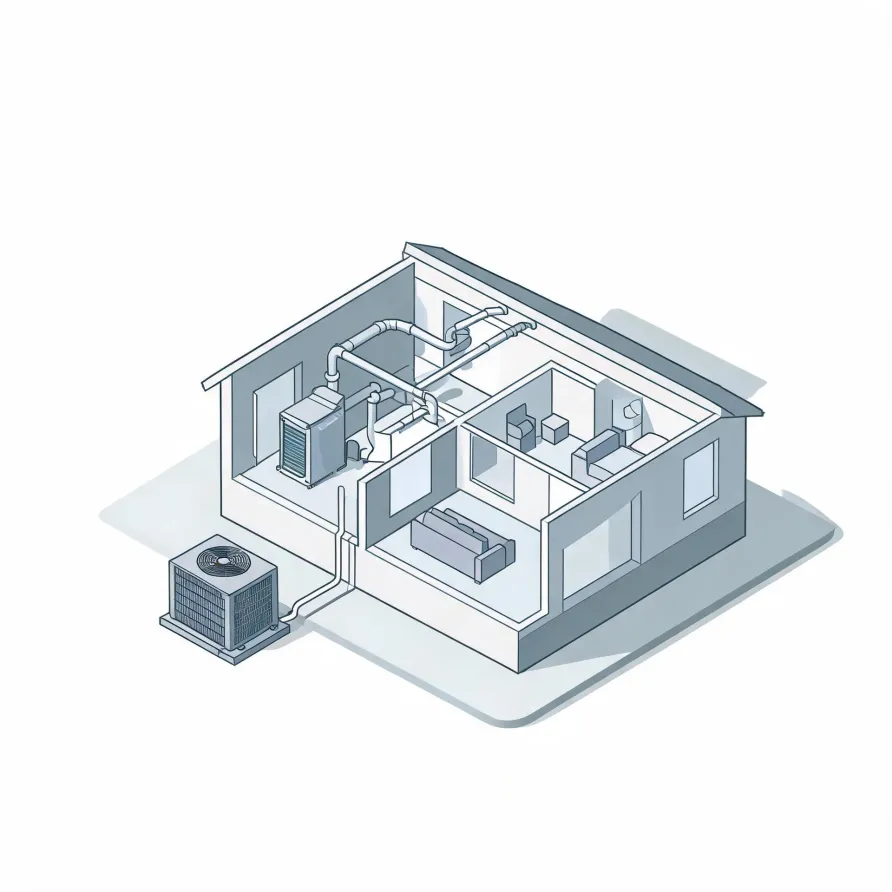
The outdoor condenser unit sits outside the house, usually on a concrete pad beside the foundation, and it is where heat gets released to the outside air. The indoor air handler or furnace-mounted evaporator coil sits inside, most often in a utility closet, basement, or attic. These two pieces are where a contractor starts when the system is not cooling.
The copper refrigerant lines run between the indoor and outdoor units, carrying refrigerant between the two. The thermostat on the interior wall and the capacitors and contactors inside the condenser cabinet round out what a contractor will open up and test during a repair call.
The drawing shows the general layout of a central AC system, and a licensed contractor determines exactly what applies to your house and equipment.
Find a contractor in Gooding CountyGooding County by the numbers
32 severe weather events were recorded in Gooding County, Idaho between 2015 and 2024.
NOAA National Centers for Environmental Information, Storm Events Database, bulk CSV export, events 2015-01-01 through 2024-12-31.Half the homes in Gooding County, Idaho were built in 1976 or earlier (2020-2024 ACS 5-year).
U.S. Census Bureau, 2020-2024 American Community Survey 5-Year EstimatesGooding County, Idaho holds 6,141 housing units (2020-2024 ACS 5-year).
U.S. Census Bureau, 2020-2024 American Community Survey 5-Year EstimatesOwners occupy 70.8% of the occupied homes in Gooding County, Idaho (2020-2024 ACS 5-year).
U.S. Census Bureau, 2020-2024 American Community Survey 5-Year EstimatesCodes & Standards Behind Central AC Repair in Gooding County, Idaho9 sourced rules and standards
What Happens When the Contractor Comes Out
Split-system central air conditioners rated below 45,000 Btu/h manufactured on or after January 1, 2023 must meet a federal minimum of 13.4 SEER2.
Split-system central air conditioners rated at or above 45,000 Btu/h manufactured on or after January 1, 2023 must meet a federal minimum of 13.4 SEER2.
Split-system central air conditioners manufactured between January 1, 2015 and December 31, 2022 had to meet 13 SEER, the metric that preceded SEER2.
Single-package central air conditioners manufactured on or after January 1, 2023 must meet a federal minimum of 13.4 SEER2.
Space-constrained central air conditioners manufactured on or after January 1, 2023 must meet a federal minimum of 11.7 SEER2.
Federal efficiency standards for split-system central air conditioners and heat pumps are set on each certified combination of outdoor unit and indoor coil rather than on the outdoor unit alone.
Residential and light commercial air conditioning and heat pump systems assembled in the field, including mini-splits and unitary systems, may not be installed on or after January 1, 2025 using a refrigerant with a global warming potential above 700.
A field-assembled system whose specified components were all manufactured or imported before January 1, 2025 carries no installation compliance date under the refrigerant restrictions and may still be installed.
Licensing Rules for HVAC Repair in Gooding County, Idaho
Idaho requires a state certificate of competency for heating, ventilation and air conditioning work: it is unlawful to engage in the business, trade or practice without passing the examination and holding the certificate.
Severe Weather Events in Gooding County
Weather puts load on cooling equipment. How hard a system works, and how often it strains, shapes what repair needs look like in a given place.
32 severe weather events, 2015–2024. Source: NOAA National Centers for Environmental Information, Storm Events Database.