



Signs of a bad AC capacitor in Idaho

Answer a few questions instead of calling shop after shop.

Start one form

A bad capacitor usually shows up as an AC that hums but won't start, or a fan that spins slow and struggles to get going. Sometimes the whole unit clicks and trips off without ever blowing cold air. The capacitor holds the charge that gets the compressor and fan motor moving, and once it weakens, those motors don't have enough push to start. Heat makes this worse. Idaho summers run hot and dry, and a capacitor sitting in that heat day after day breaks down faster than one that gets a break. If your outside unit is running longer than it used to, or kicking on and off in short bursts, that's often the same problem showing up before it fails completely. Left alone, a weak capacitor can take the compressor down with it, which turns a small repair into a much bigger one.

An outdoor air conditioner condenser unit on a concrete pad beside a house with light horizontal siding, with a small electrical disconnect box on the wall, mulch and shrubs at left, and a plain white wall and concrete slab at right.

Why heat makes it worse

A capacitor loses strength as it ages, and heat speeds that along. On a dry Idaho afternoon with the unit running flat out for hours, a capacitor that's already weak often picks that moment to fail. It's why these problems tend to show up in July and August rather than in a mild April stretch, even when the part has been wearing down for a year or more.

A dark gray outdoor air conditioner condenser unit on a concrete pad beside a house with horizontal siding and a plain light wall, with mulch and grass in the foreground and a conduit and electrical box on the wall.

What a contractor checks first

A capacitor is rated in microfarads, and that number is stamped right on it. A contractor tests it against that rating with a meter. Read much below the stamped number and it's not holding charge the way it should, even if the unit still limps along. It's a quick check, and it tells a contractor whether the capacitor is the problem before anything gets replaced.

Weak Capacitor vs. Dead Capacitor

Starts Fine, Runs Weak

  • The fan kicks on and the compressor starts, but the air coming out isn't as cold as it used to be.
  • The outdoor unit runs longer than it should to hit the temperature you set, and your power bill shows it even with cheap rates here.
  • You'll sometimes hear the fan motor struggle for a second before it catches, especially once the afternoon heat sets in.
  • The system still cools the house, so it's easy to put off calling anyone about it.
  • A capacitor in this state can hold on for weeks or fail the next hot day. There's no way to tell which from outside the unit.

Won't Start At All

  • You hear a hum from the outdoor unit but the fan never turns and no cold air comes through the vents.
  • The unit clicks and trips off on its own, sometimes more than once in an afternoon, without ever running a full cycle.
  • The fan blade, if you can see it, sits still or spins so slowly it looks like it's fighting to move.
  • No cooling means no relief for anyone in the house until a contractor swaps the part.
  • This is the point most homeowners call, since by now there's no cold air to argue with.
A gray outdoor air conditioner condenser unit on a concrete pad beside a house with horizontal siding and a stucco foundation, with a disconnect box and conduit on the wall, decorative gravel, mulch, and a shrub nearby.

Running the way it should

The compressor kicks on right away and settles into a steady hum. Air coming off the coil is cold within a minute or two. The fan turns at full speed, no hesitation, no clicking from the disconnect box. This is a capacitor doing its job.


An outdoor air conditioning condenser unit on a concrete pad beside a house with horizontal lap siding, with an electrical disconnect box and conduit on the wall, mulch and a green shrub to the right, and a concrete walkway in the foreground.

A capacitor giving out

Dirt caked on the coil grilles makes the unit work harder, and a weak capacitor can't keep up with that extra load. You'll hear a hum with no start, or the fan turning slow and straining. Some units click and trip off before any cold air comes through.

Is your AC acting strange on hot afternoons

Walk past the outdoor unit and listen. A hum with no fan movement, or a fan that spins once and stalls, points straight at the capacitor. You might notice the air from the vents isn't as cold as it was, or the system short cycles, kicking off a few minutes after it starts. Some units click repeatedly from the disconnect box without ever catching. If it's still running but struggling, the compressor is working harder than it should, which wears it down faster and can shorten its life. Left alone through a few more hot stretches, a failing capacitor usually ends in the unit not starting at all, right when the house needs it most.

A woman in a knitted shawl sits in a living room with a fireplace, shelves, a sofa with cushions, and a lamp by a bright window, looking off to the side.
A woman with long brown wavy hair in a green shirt over a white top stands in a living room with built-in white shelves, a ceiling fan, a potted plant and a sliding glass door.
A woman with shoulder-length gray-streaked hair in a light gray knit sweater stands smiling and looking off to the side in a living room with a sofa, houseplant, framed picture, and sunlit sliding glass door.
A woman with shoulder-length curly gray hair wearing a gray knit sweater stands near a window with a sheer curtain, looking to the side, with a blurred interior room behind her.

One form, no calling around

Your request goes to one pro, not a list of companies.

You only hire the pro if you want to.

Catching it before it quits

A capacitor that's starting to go still gets the compressor running, just slower than it should. The outdoor unit takes a few extra seconds to kick on, or you hear it struggle before it settles into a hum. Catch it here and a contractor who knows this equipment can swap the capacitor on one visit. It's a small, well understood part, and someone local who sees this failure every summer can usually tell what's wrong before they even open the panel.

Waiting until it fails outright

Leave a weak capacitor alone and eventually the compressor won't start at all. You'll hear the unit hum and trip off, or nothing happens when the thermostat calls for cooling. By then the compressor has often been straining against a bad capacitor for weeks, which raises the chance something else in the unit got stressed along with it. A dead capacitor on a 95 degree Idaho afternoon also means no cold air until someone gets out to look at it.

An outdoor air conditioner condenser unit on a concrete pad beside a house with light horizontal vinyl siding, surrounded by bare dirt, gravel and dry leaves, with refrigerant lines and conduit running along the wall.
Before you get your air conditioner repair
A gray outdoor air conditioner condenser unit on a concrete pad beside a house with horizontal lap siding, with a flowering shrub at left and a disconnect box with conduit on the wall at right.
After you get your air conditioner repair

Call around yourself

You're on the phone explaining the same hum and weak fan to company after company, then comparing quotes while your house sits warm.

Fill out one form

One local contractor, already briefed

A licensed Idaho contractor who works on these units all summer gets your situation once and takes it from there.

Fill out one form
A woman and a child wrapped together in a knitted gray blanket on a couch, with the child's head resting on her shoulder and a lit table lamp and houseplant in the background.
An older woman with gray hair in a bun and glasses, wearing a beige knit sweater, smiles while looking to the side in a warmly lit kitchen, with a loaf of bread on the counter in the foreground and a snowy scene outside the window.
  1. Power reaches the capacitor the moment the thermostat calls for cooling

  2. The capacitor sends a strong jolt to start the compressor motor

  3. A second winding keeps the fan motor turning at full speed

  4. A weak capacitor delays that jolt, so the compressor strains to start

Power costs 11.83 cents per kilowatt-hour statewide

At 11.83 cents a kilowatt-hour, running power isn't what strains your system on a hot afternoon. A weak capacitor does that, forcing the compressor to pull hard and run long just to catch up. Fix the capacitor and the unit goes back to cooling the way it should, without working overtime to do it.

EIA-861 2025 statewide residential average

A gray outdoor air conditioner condenser unit on a concrete pad beside a house with dark horizontal siding and a stone base, surrounded by gravel, with a flowering shrub at left and a concrete walkway in front.

Clean and clear running

This condenser sits clean on its pad, fins clear, disconnect box closed up tight beside it. A capacitor in good shape gets the compressor going the moment the thermostat calls, and the fan spins up at full speed right behind it. No hum, no hesitation, no clicking from the disconnect box.

An outdoor air conditioner condenser unit sits on a concrete pad beside a stucco wall, with refrigerant lines and conduit running to the wall and a shrub to the left.

Grime and strain showing

Years of dust and weather have built up on this unit's fins and casing. A capacitor working that hard under that kind of grime loses its charge faster, and the compressor starts struggling before it quits. The lines running into the wall are carrying a strain the unit wasn't built to handle this long.

A closed silver laptop and a ceramic mug of dark coffee sit on a wooden table in front of two chair backs, with a kitchen counter, tiled backsplash, wooden cutting boards, a vase of greenery and a potted plant by a window behind.

A hum, a slow fan, a unit that trips off: that's the capacitor

You've got a good sense by now of what to listen for outside. Starting fine but running weak, a fan that hesitates, the unit clicking off before the house ever cools down. All of it traces back to one part that either holds its charge or doesn't.

A licensed Idaho contractor can confirm it in a few minutes rather than you spending an afternoon on the phone describing the same hum to company after company and lining up quotes. One contractor who already knows what you're dealing with, out to look at the unit, and your house gets back to cooling the way it should.

Interior corner of a room with a window and sheer curtain at left, a gray upholstered sofa with a cushion at right, and a round wooden table holding stacked books and a round vase with an olive branch.
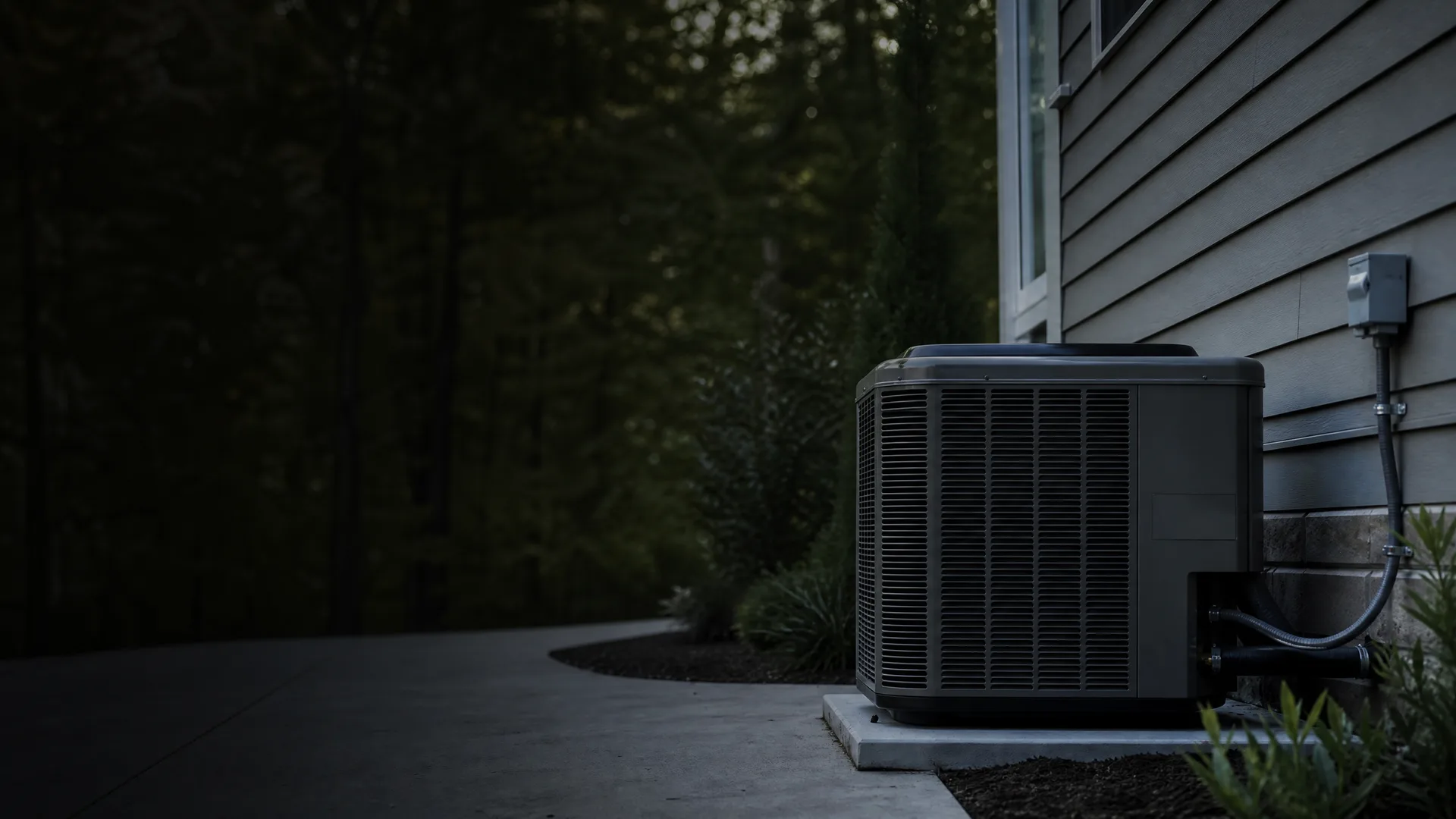
An outdoor air conditioner condenser unit sits on a concrete pad beside a house with horizontal lap siding, with a refrigerant line, electrical disconnect box, a concrete driveway and dark trees in the background.

Explain it one time

Only one pro gets your request, so you hear from one company.

Step 1 of 3: Equipment