Send the form and stop researching installers for the new air conditioner.
R-22 is already gone. Now R-410A, the refrigerant in most Idaho air conditioners installed over the past two decades, is being phased down too. It isn't illegal to own or run a unit that uses it. But production and import of new R-410A is being cut back each year, so if your system develops a leak down the road, the refrigerant to recharge it will cost more and may be harder to find.
For a new installation, this matters now. Manufacturers have moved to R-454B and other new refrigerants for equipment built today. If you're replacing an AC in Boise or anywhere else in Idaho, what goes in the ground is no longer R-410A equipment. That changes what a contractor needs to know, what parts and tools apply, and which systems are actually available to install.
Idaho summers are hot and dry, and most homes here heat with gas, which means the air conditioner is doing its own job without a furnace heat pump sharing the load. When it's time to replace that unit, you want someone who already knows the refrigerant changeover cold, not someone figuring it out on your roof.
That's the part you shouldn't have to sort out yourself. Finding a contractor who installs the current systems, understands how the phase-out affects pricing and availability, and can speak plainly about what fits your home means calling around, explaining your situation more than once, and weighing quotes that may not even be for the same equipment.
Send the form once and that search is off your plate. You won't be the one tracking down who's current on R-454B versus who's still quoting yesterday's systems. That part of the job moves to someone else, and the hot months ahead stop being something you're facing alone.
R-410A is not banned, but the manufacturing quotas keep shrinking, so the supply that's left gets more expensive each year a repair needs it. New central air conditioners sold now use R-454B instead, a refrigerant that isn't subject to the same phase-down. If your AC is old enough to need a major repair, like a failed compressor or a leak in the coil, this is the moment that decision gets harder: fixing it means paying more for refrigerant that's getting scarcer, while a new unit sidesteps the issue entirely. Idaho summers are hot and dry, and the unit runs hard for months at a time, so a system already near the end of its life doesn't have much room left to gamble on R-410A prices climbing further. None of this means your current air conditioner needs to be replaced today. It means that when it does need major work, replacement is worth weighing seriously instead of assuming repair is the cheaper path.
How the refrigerant switch actually works
R-410A is a blend, not a single gas, so it has to be charged as liquid or it separates inside the line.
A leak means the whole charge gets recovered and replaced, never just topped off with more refrigerant.
R-454B runs at a higher pressure than R-410A, so it needs its own gauges, hoses, and recovery equipment.
A new R-454B condenser cannot be paired with your old R-410A coil, since the metering device and oil type differ.
R-454B carries a mild flammability rating, which is why installers follow different line-set and brazing rules for it.
Your outdoor unit and indoor coil are matched as a set, so the refrigerant type has to match on both ends.
R-410A doesn't boil off as one substance. It's a mix of two gases that have to stay in exact proportion, which is why a technician charges it as a liquid, measured by weight, rather than by pressure alone. If a line develops a leak, there's no such thing as just adding a little more. Whatever is left gets pulled out, and the system gets recharged from empty, because a partial charge of a blend isn't the same mix it started as. R-454B, the refrigerant in new condensers, runs at higher pressure than R-410A. That means different gauges, different hoses, different recovery tanks, equipment a shop either already owns for this work or doesn't. It also carries a mild flammability rating, which changes how the line set gets run and brazed, not because it's dangerous sitting in a condenser, but because the installation itself follows different rules. None of this is something you can mix and match at the unit. An R-454B condenser needs an indoor coil built for it, because the metering device that doses refrigerant into the coil and the oil that circulates with it are both specific to the refrigerant. A condenser and coil are engineered and sold as a matched pair for exactly this reason. If your outdoor unit was built for R-410A, the coil inside your house was too, and a straight swap of one half isn't how any of this gets installed.
A working R-410A system has no reason to come out early just because the refrigerant is being phased down.
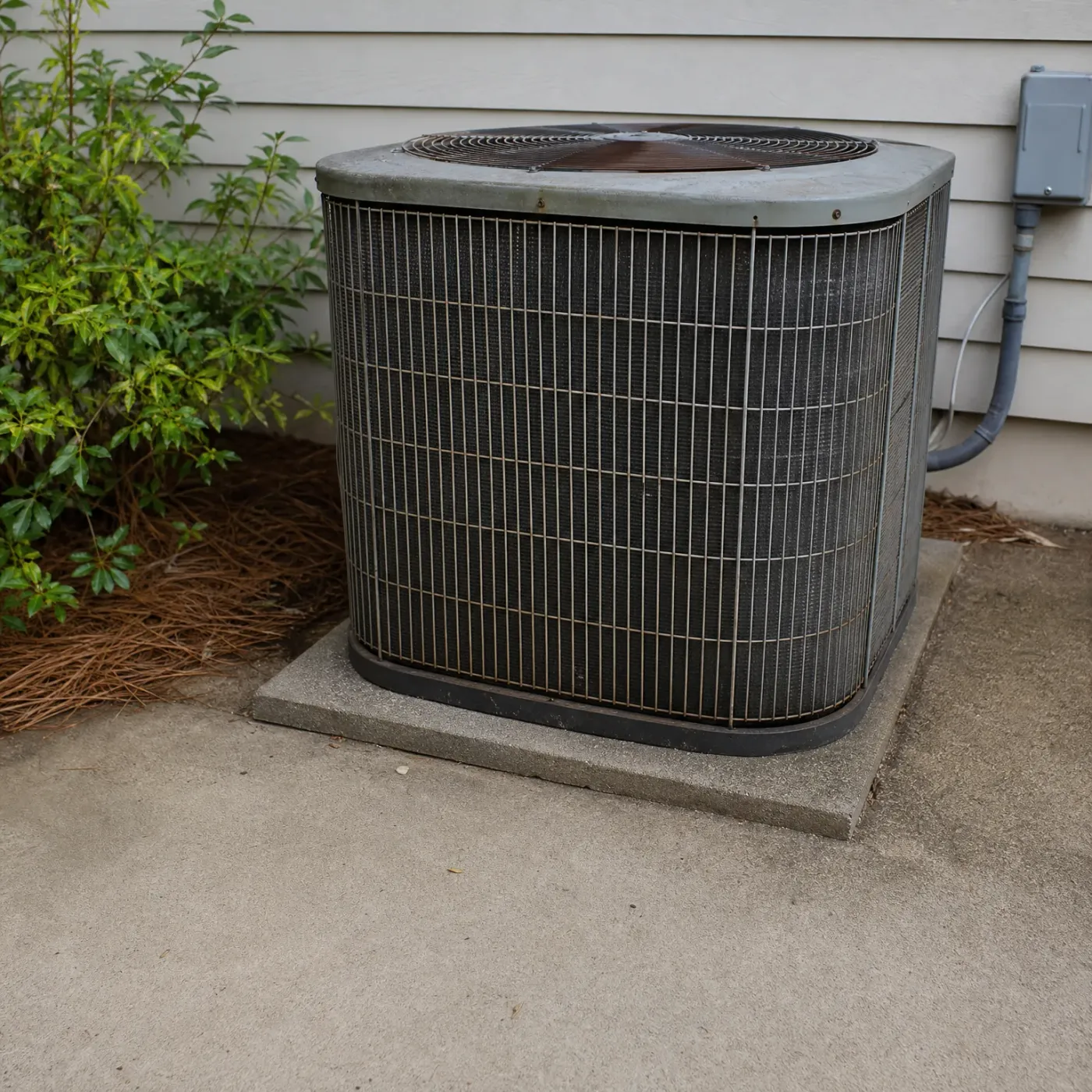
A rusted shroud and dirty fins on a system this age are the signal to ask about R-454B before the R-410A charge fails.
By nine the sun is finally off the house, but the upstairs bedroom hasn't caught up. The box fan is wedged in the window, pulling in air that isn't much cooler than what it's pushing out. You're on top of the sheets, not under them. Down the hall you can hear the condenser outside still cycling, the sound of it working harder than it should this late. Your phone's on the nightstand, screen still lit from checking the thermostat app one more time, like that changes anything. The dry Idaho night air comes through the screen gritty with dust off the field behind the house. Tomorrow's supposed to be hotter.
If your R-410A system is still cooling the house fine, you don't need to do anything about any of this today. But once it fails, in July, with Idaho's dry heat pushing the house into the 90s, you won't want to spend that week calling around. You'd be pulling up names, explaining the same thing to three or four contractors, waiting on quotes, trying to figure out who actually knows R-454B equipment and who's just installed R-410A for twenty years. That's hours you don't get back, on top of a house that isn't cooling. Sending the request now means that search is already done when you need it. One contractor who installs these systems gets your information and reaches out, and from there it's a conversation about your house, not a scramble. The sooner it's off your plate, the less that eventual breakdown costs you in time.
A new R-410A system installed today still has a normal service life ahead of it. Nothing about the phase-down shortens how long the unit itself is expected to run.
What changes is the cost of keeping it alive if the charge ever leaks. The refrigerant gets pricier each year production quotas shrink, while the unit's own lifespan stays the same.
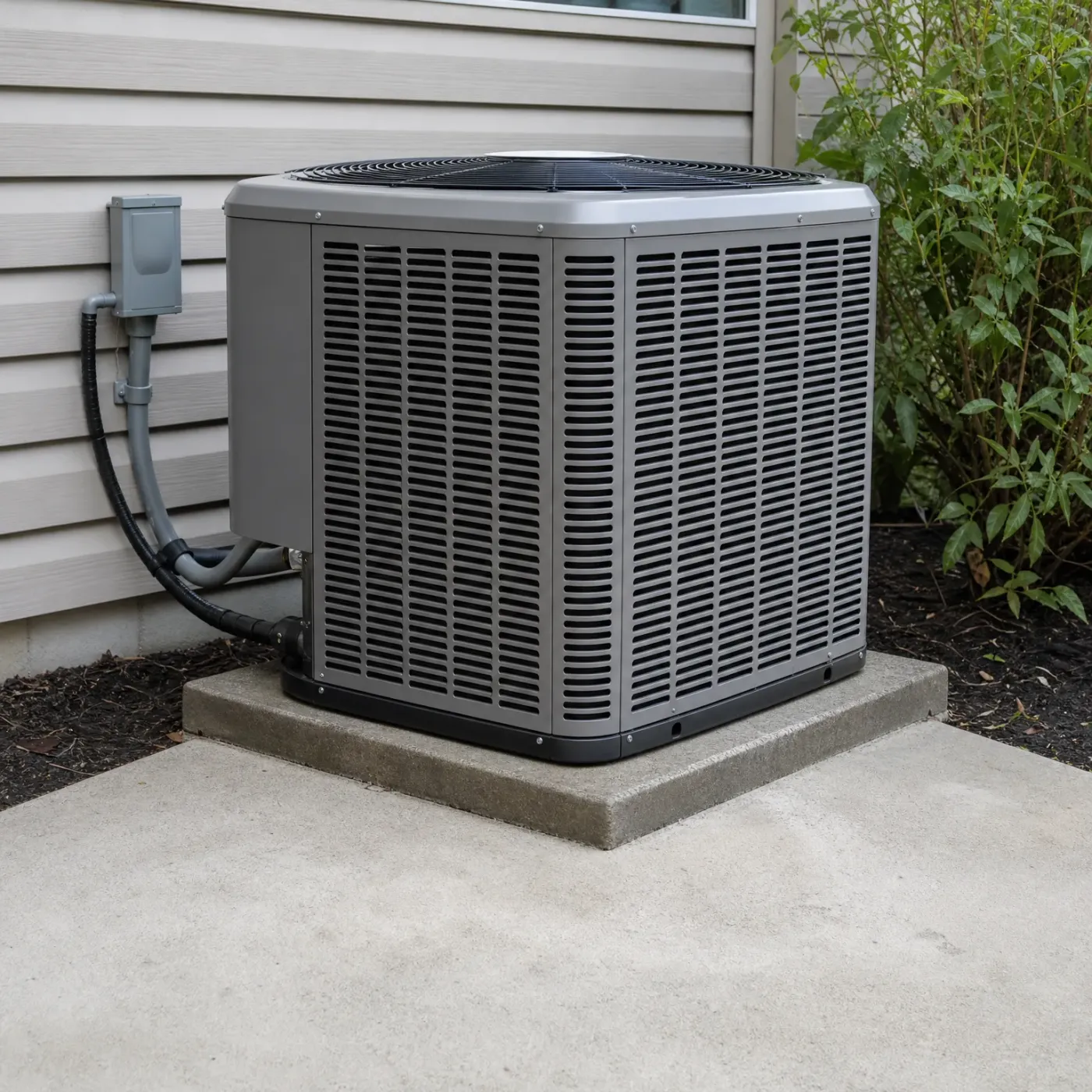
Before you get your air conditioner installationAfter you get your air conditioner installation
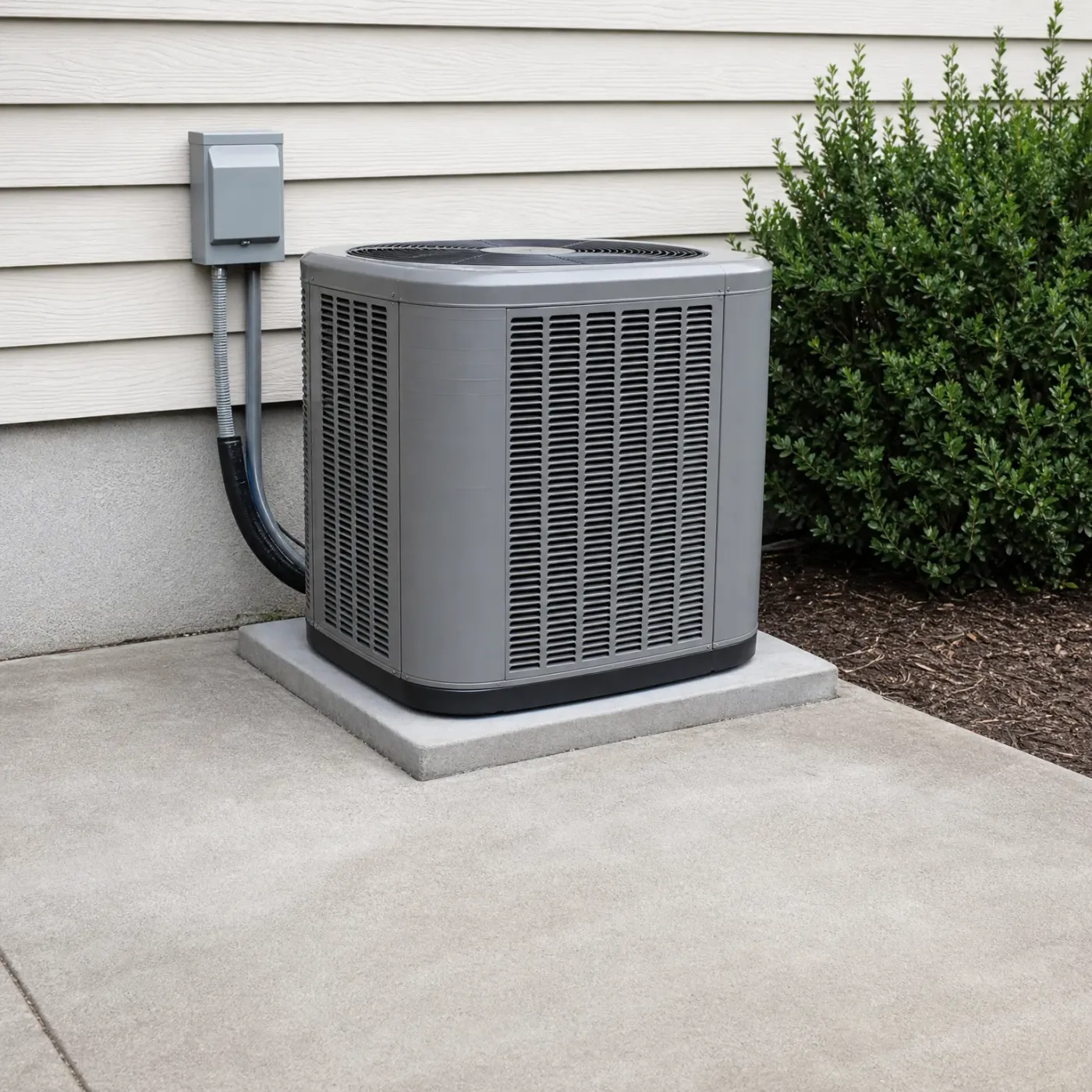
Running clean, no reason to touch it
This is what a healthy condenser looks like: clear fins, open cage, the disconnect box and lines doing their job without strain. If your unit looks like this, the R-410A phase-down is not a reason to replace it early.
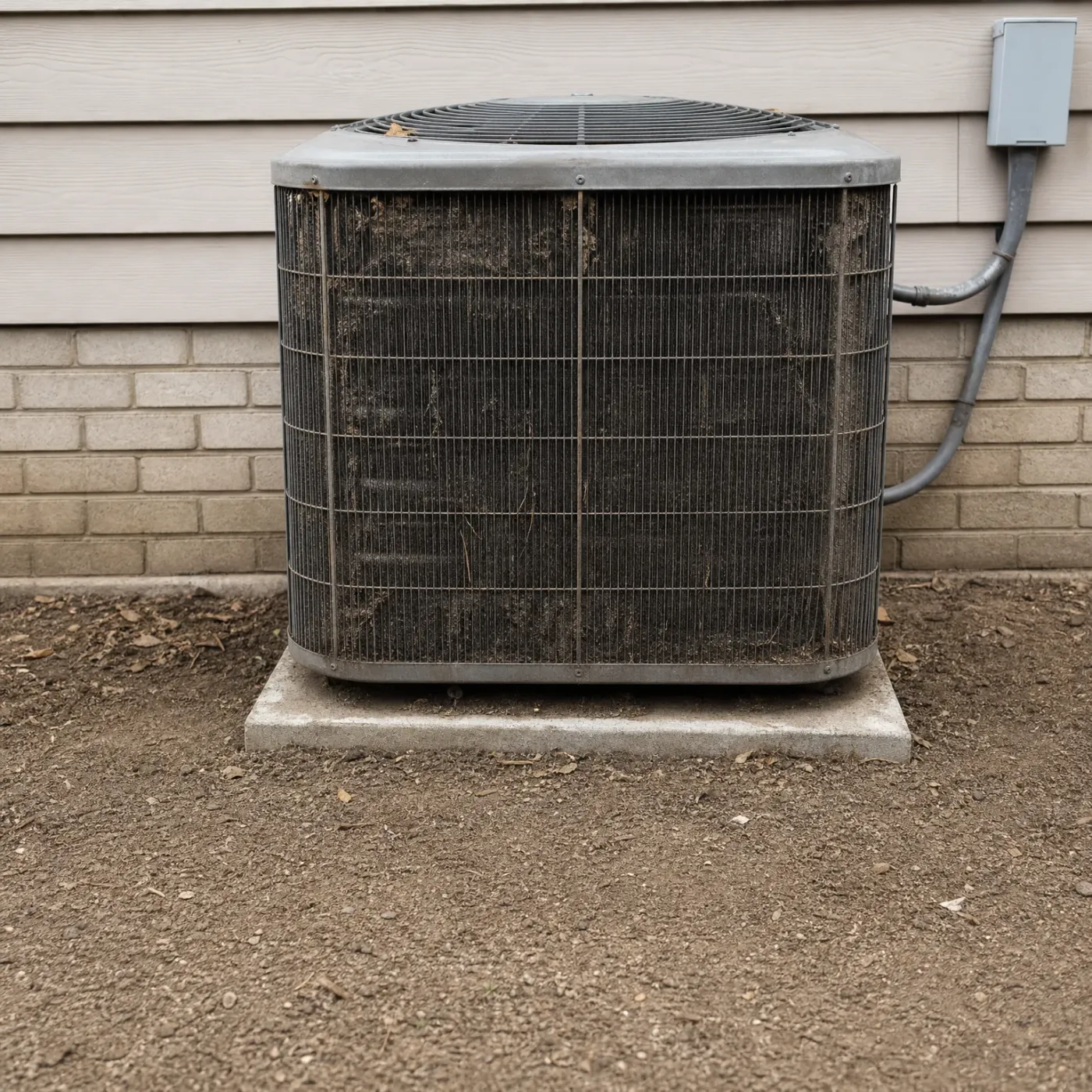
Clogged fins, a different conversation
Dirt packed into the coil and wire cage makes the unit work harder to move the same heat. On a system this old, that strain is worth pairing with a question about whether to repair the R-410A charge or install an R-454B system instead.
Power costs 11.83 cents per kilowatt-hour statewide
At 11.83 cents a kilowatt-hour, running a new air conditioner here doesn't carry the sting it does in a lot of other states. A R-454B system won't cost much more to run than your old R-410A one does now, so the switch comes down to the unit itself, not your power bill.
EIA-861 2025 statewide residential average
1
A technician recovers whatever R-410A is left in the lines
2
The old condenser, coil, and lines come out
3
New lines get run sized and rated for R-454B pressures
4
The new condenser and coil go in and get charged
Still charged with R-410A
If it's cooling the house fine, leave it alone. A working system is not a reason to spend money early just because the refrigerant is being phased down.
If the line ever opens up, the old gas gets expensive to replace and the unit may not be worth it. That's when switching to R-454B is worth asking about.
A straight repair, like a capacitor or a contactor, costs the same whether the unit runs R-410A or R-454B.
If the charge itself hasn't leaked, there's no refrigerant cost to worry about at all.
A leak repair means recovering the old charge and buying new R-410A at whatever price it's selling for that year.
You keep the condenser and coil you have, and they keep running at the pressures they were built for.
Nothing about a repair changes the lines or fittings, so there's no mismatch to plan around later.
Replace with R-454B
The lines get resized and the coil gets swapped, since R-454B runs at higher pressure than R-410A was built for.
Once it's in, there's no yearly refrigerant price climb to think about, because R-454B isn't being phased down.
You're paying for the full swap now instead of a possible repair bill later, so the cost lands sooner.
A new condenser and coil start their service life fresh rather than picking up wherever the old one left off.
If the old unit is already rusted or straining, replacing it settles the refrigerant question and the equipment's age in one move.
Summer air in Idaho is dry, and your air conditioner has an easier job because of it. The dew point averages 42°F across June, July and August, measured over where homes in the state actually sit. That's low. A system moves heat out of the house, and when the air coming in is already dry, it doesn't have to wring water out of it first. You'll notice it as a shorter run time on the hottest afternoons and a house that cools evenly instead of feeling clammy once the temperature drops. It also means less condensation load on the coil, which matters less for comfort than for how hard the unit works to get there.
NASA POWER T2MDEW county cells weighted by homes
Where that leaves you
R-410A isn't going away overnight, and a system that's running fine doesn't need to change. What's changing is the cost of a leak, because the charge itself gets harder to find and more expensive every year the quotas shrink. A new system runs R-454B instead, sidesteps that problem, and costs about the same to run here given what power costs in Idaho. The decision isn't urgent. It's just one worth making with your eyes open before the old unit forces it on you in August.
If you'd rather not be the one tracking down a contractor when that day comes, that part can happen now instead. Send the form and you're done with the searching, the phone calls, the explaining the same problem three different times, the sorting through quotes that don't match up. Someone qualified gets matched to your situation, and from there it's off your plate.