One hour or less
That's about how long dust burning off a cold coil should last on the first hot day. Past that, something else is heating up.
Matched to your air conditioner job
A burning smell from your AC can mean a few different things, and some are more urgent than others. Dust burning off at the start of summer is one thing. A motor or wiring smell is another. This page walks through what's behind it so you know what you're dealing with, and gets you to a contractor who can take a look.
Find my proA burning smell from your AC usually comes from one of a few places. If this is the first hot day you've run it, dust that settled on the coil or in the ducts over a mild spring is burning off, and that clears up in an hour or so. If the smell keeps up, or if it's sharp and electrical, something inside is overheating, a worn-out motor bearing, a capacitor going bad, wiring that's loose where it connects. Idaho summers are hot and dry, and that means your AC runs hard and long through July and August, which puts more hours on the motor and the electrical connections than a mild summer would. A unit that's been cycling nonstop for weeks is more likely to show a problem than one running a few hours a day. If the smell is electrical and steady, or if you see smoke, shut the system off at the thermostat and don't run it again until someone's looked at it.


Most burning smells trace back to one part working harder than it should. The capacitor sits near the compressor and fan motor and gives them the jolt they need to start. When it weakens, the motor strains on startup, pulling more current than its windings are built for, and that extra draw heats the wire insulation enough to smell before anything actually fails. You'll often hear it before you smell it, a clicking or a hum from the outdoor unit as the motor tries and struggles to catch.
A different smell, more electrical or like hot plastic, points somewhere else entirely: a loose connection at the disconnect box outside, or at the contactor that switches power to the compressor. A loose connection arcs, and arcing gets hot fast.
If what you're smelling is coming from the vents inside the house, look to the blower motor instead of the outdoor unit. Worn bearings on that motor can run hot in a way that reaches you through the ductwork.
A rubbery smell gets blamed on a belt, but check your unit before assuming that. Most central air conditioners are direct drive and don't have one. A worn rubber grommet near a motor mount is more likely the source.
Whatever the cause, shut the system off at the thermostat rather than letting it cycle off on its own. That stops a failing part from continuing to draw current while it's already running hot.




That's about how long dust burning off a cold coil should last on the first hot day. Past that, something else is heating up.
Dust and grit blow in easily with dry heat and build up on the coil fast, which is why that first burning smell of the season shows up here.
You might catch the smell as soon as the AC kicks on, or only after it's run a while. Maybe there's a thin haze near the vents, or the air coming out feels about the same temperature as the air going in. Some people hear a click or a hum right before the smell shows up. Others just notice the house isn't cooling the way it should on a 95-degree day, and the smell is the second clue, not the first. If the smell fades within the hour and nothing else is off, that's dust. If it lingers, or the AC is working harder and cooling less, a motor or wiring is overheating, and running it that way risks more damage the longer it continues.
Warm air passes over a dirty coil and dust left from spring starts to smoke.
Airflow drops further, so the compressor and fan motor work harder than normal.
A weak capacitor forces the motor to draw extra current trying to start.
That extra current heats the motor windings until insulation begins to smell.


At 11.83 cents a kilowatt-hour, running your AC here doesn't cost much to begin with, so a strained motor burning extra power to force air through a dirty coil barely shows up on your bill before it fails outright. The smell catches up with you long before the cost does.
EIA-861 2025 statewide residential average
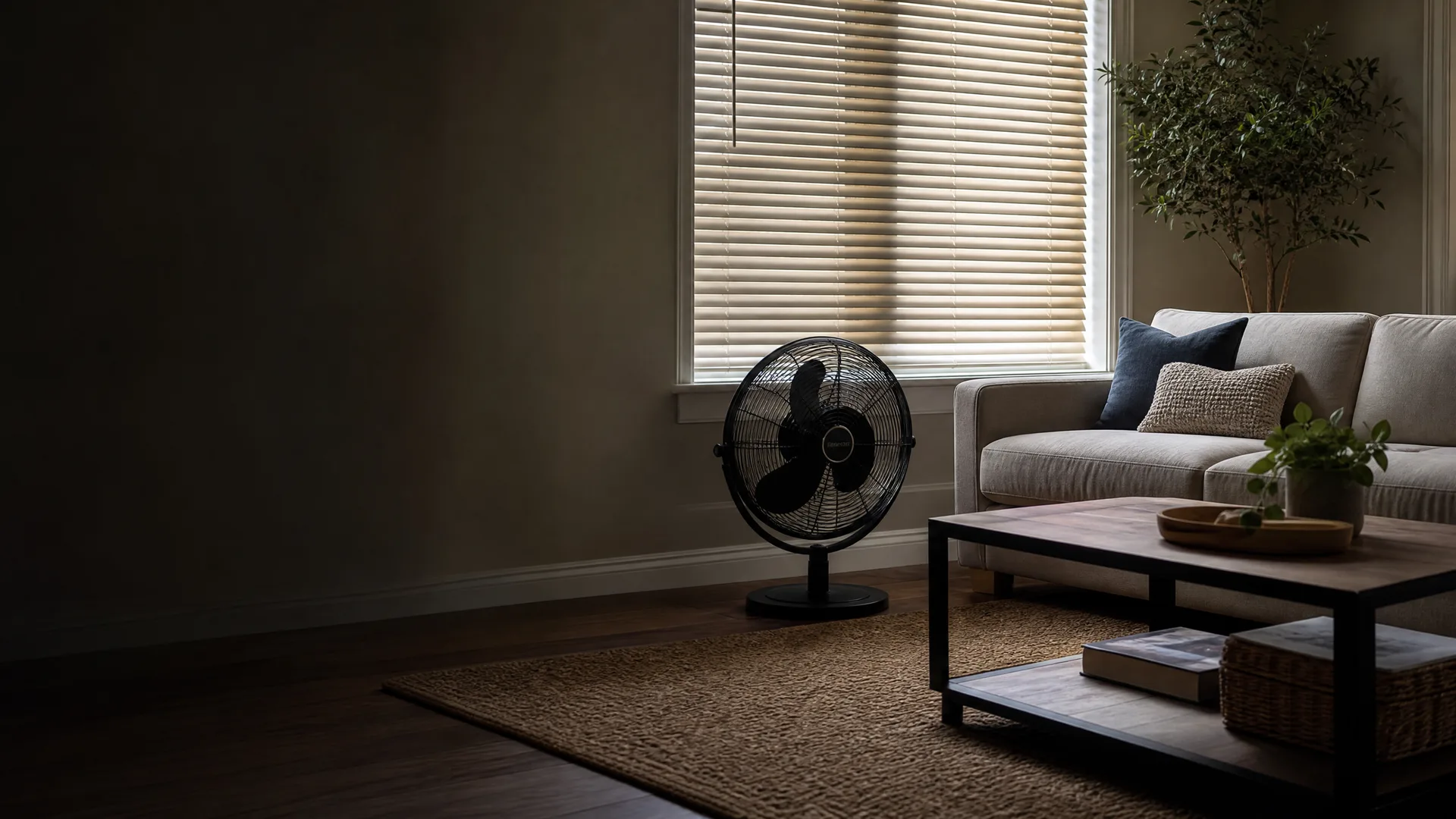
It's the middle of July, early afternoon, and you've got the blinds drawn against the sun. The floor fan next to the couch is running on high, stirring the air more than cooling it. Outside it's hot and dry, the kind of heat that makes the one tree in the yard throw almost no shade past noon. You notice the AC cycling on in the next room, and under the fan's hum there's that faint burnt smell again, same as the last few afternoons. You turn the fan a little toward yourself and keep reading, deciding it's not worth standing up for yet.
One request and the search for a pro is handled.
There's no charge for the request.

Idaho summers are dry, and that's part of why a burning smell shows up fast instead of staying hidden. The dew point here only averages 42°F across June, July and August, according to NOAA climate data. Dry air like that doesn't carry much smell with it, so there's nothing masking the odor once your AC starts burning off dust or straining a motor. You'll pick up on it right away, often within the first few minutes the system runs, rather than noticing a faint smell that builds over days. That's useful. It means you catch a problem early, before a strained motor or a bad capacitor turns into a bigger repair.
NASA POWER T2MDEW county cells weighted by homes
You notice the smell for a few minutes right after the AC kicks on, then it fades and the rest of the run is fine. That pattern makes you wonder if it's something you can let go, especially since it's not there the whole time the system runs. The timing itself is actually the clue to what's happening.
Dust and fine grit settle on the coil and in the ductwork while the system sits idle between cycles, especially with Idaho's dry air carrying so much of it indoors. The moment the unit fires up, that layer hits a hot coil and burns off, which is the smell you catch in those first few minutes. Once it's burned away, there's nothing left to smoke until more settles, so the smell drops off on its own. If it fades within a few minutes every time and doesn't come back mid-cycle, that's consistent with dust rather than a motor or wiring problem. If it starts lingering longer than it used to, or shows up again partway through a run, that's worth having someone look at.

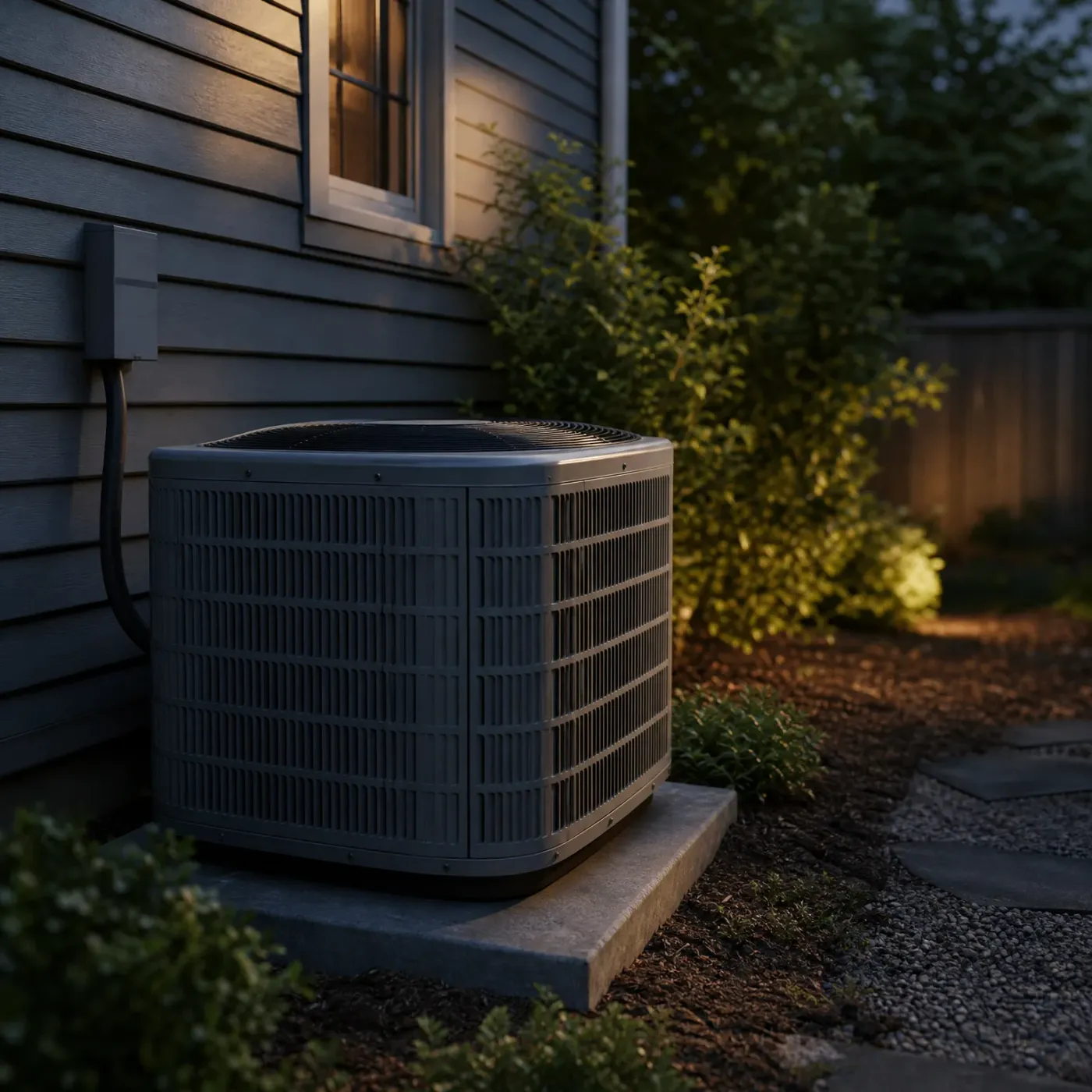
A coil like this is clear, so air moves through it the way it's supposed to and the fan motor and compressor aren't straining against anything. No dust load, no burning smell, just the unit doing its job on a hot afternoon.

This unit has sat against the house through a few summers, gravel and dried weeds crowding the base. Dirt works into the coil over time, the cabinet takes weather, and a unit in this shape is the one more likely to be the source of that smell.



A burning smell from your AC is either dust clearing off a coil or a motor and capacitor working harder than they should. The first clears up on its own inside an hour. The second doesn't, and it tends to get worse the longer the unit keeps running that way. Checking it now, while it's still a smell and not a failed compressor, is the difference between a repair and a replacement.
You don't have to figure out which one it is on your own. A contractor who works on these units in Idaho's dry heat can look at the coil, the capacitor, and the motor and tell you in minutes what's actually going on. Once you send the request, that part stops being something you have to sort out yourself. Someone who knows the equipment takes it from here and reaches out to you directly.


Get the right pro for your air conditioner