Why your AC unit is buzzing in Idaho

Step 1 of 3: Equipment

Why is my AC unit buzzing?

A buzzing sound from your AC is easy to notice, especially once it's running most of the day in the Idaho heat. It's not the same as the normal hum of the compressor or fan. Buzzing usually points to something specific, and whether it's minor or worth shutting the unit off for depends on where the sound is coming from and what else the system is doing.

A loose part or an electrical problem is making it buzz

Buzzing almost always comes from something vibrating that shouldn't be, or an electrical component struggling to do its job. A fan blade hitting a loose panel, a contactor with pitted contacts, or a capacitor losing its charge can all cause that sound. Loose screws on the outdoor unit's cabinet will buzz too, especially after a dry Idaho summer bakes the housing and lets fasteners work free. If the buzzing comes with the unit struggling to start or the air not getting as cold as it should, that points to a capacitor or contactor rather than a loose panel. Either way, the sound means something inside is not sitting or working the way it's supposed to, and it's worth having a contractor look at before a small issue turns into a failed part.

A woman in a cream cowl-neck sweater sits by a window with snow outside, in a dimly lit living room with a sofa, lit lamp, mirror, candles and a fireplace.
A woman in a gray turtleneck sweater sits beside a large window looking out at snow-covered evergreen trees, in a dimly lit living room with a lit fireplace, lamps, couch and houseplant.
A woman in a cream turtleneck sweater stands beside a large window with snow-covered ground and bare trees outside, in a dimly lit living room with lamps, a sofa and framed art.
A woman in a grey cowl-neck sweater stands indoors near a window, looking out at falling snow, with a lamp, framed picture and couch in the warmly lit room behind her.

Check It Yourself or Call a Pro

Safe to check yourself

  • If the buzz only happens when the outdoor fan blades are touching debris or a bent fan guard, clearing the area and straightening the guard is something you can do without opening the unit.
  • A buzz that stops when you swap a dirty air filter for a clean one usually means airflow was restricted, not a failing part.
  • Loose panels on the outdoor unit can buzz against the cabinet in the wind; tightening the screws you can reach from outside is low risk.
  • If the buzz only shows up at certain fan speeds on the thermostat, noting which setting it happens on gives a contractor useful information before they even arrive.
  • A buzz that comes and goes with the outdoor temperature, worse in the afternoon heat, is worth writing down with the time of day it happens.

Needs a licensed contractor

  • A buzz from the electrical disconnect box next to the outdoor unit can mean loose wiring or a failing contactor, and that box carries line voltage.
  • If the buzzing starts right as the compressor kicks on and gets louder, a weak run capacitor or a failing compressor can be behind it.
  • A buzzing sound paired with the unit struggling to start, or starting and shutting off quickly, points to an electrical problem inside the cabinet, not something to open yourself.
  • Refrigerant lines that buzz or hiss under the insulation suggest a charge or line issue that needs gauges and training to diagnose.
  • If the indoor air handler itself buzzes, especially near the blower motor, the fix usually means removing panels and testing parts with a meter.
  • A burning smell along with the buzz means power to the unit should be shut off at the breaker until a contractor looks at it.
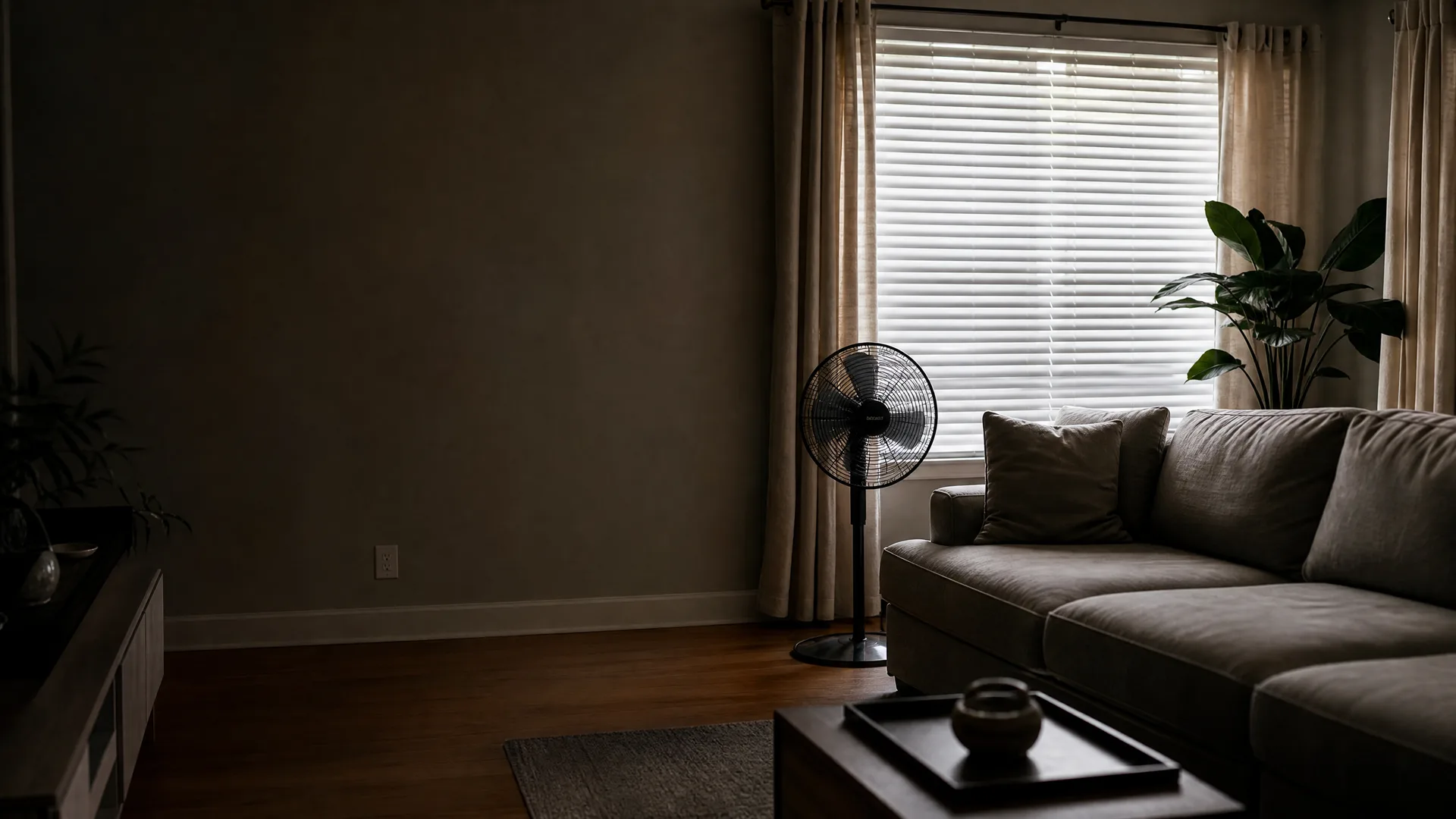
A dimly lit living room with a gray sectional sofa, a standing pedestal fan, a curtained window with blinds, a potted broad-leaved plant, a wooden coffee table with a tray and lidded jar, and a rug on dark wood flooring.

It's just past two and the sun is flat against the blinds, every slat pulled shut. The floor fan by the couch is doing most of the work, pushing warm air around rather than cooling it. You've had the TV off for an hour because you keep turning it down to hear the buzz again. It's still there, coming from outside, steady under the sound of the fan. Idaho summers run dry and hot enough that the AC doesn't get a break in the afternoon, and you don't want to find out what happens if it quits now. You sit back down, listening, telling yourself you'll go look at the outdoor unit once the sun moves off the patio.


A gray outdoor air conditioner condenser unit on a concrete pad beside a house with horizontal lap siding, with a wall-mounted disconnect box and conduit, mulch bed, shrub, and lawn nearby.
This is the buzz you want: the fan spins clean and the lines running up the wall stay frost free in the dry heat.
An outdoor air conditioner condenser unit sits on a gray pad beside a light vinyl-sided wall, on a concrete slab next to a gravel bed.
This is the one to watch: a buzz with no air moving at the condenser means something inside is failing, not just dirty.

Every buzz has a source, and the source tells you what's wrong. A panel or bracket that's worked loose vibrates against the cabinet, and tightening it is often the end of the story. More often, the sound is electrical, coming from the contactor, the switch inside the outdoor unit that sends power to the compressor each time your AC cycles on. Contacts on that switch wear down over thousands of cycles, and once they're pitted or burnt, they buzz trying to hold a clean connection. A run capacitor going bad causes a different kind of buzz, because the compressor or fan motor isn't getting the jolt it needs to start turning and instead just hums under strain. Sometimes the part itself is fine but a refrigerant line is resting against the cabinet or a wall, and it's carrying the vibration as noise. A blower wheel or fan blade thrown out of balance makes a steady buzz that tracks the motor's speed, rising and falling as it runs. The sound alone usually narrows it down.

What's actually making that sound

  • A loose part buzzes at the frequency it vibrates at, so a rattling panel sounds different from a failing motor.
  • Electrical buzzing usually comes from a contactor, the switch that closes to send power to the compressor each time it cycles on.
  • A contactor with pitted or burnt contacts buzzes as it struggles to hold a clean connection under load.
  • A failing run capacitor can cause the compressor or fan motor to buzz instead of starting cleanly, because the motor isn't getting the jolt it needs.
  • Refrigerant lines that touch the cabinet or a wall can transmit vibration as a buzz even though the line itself is fine.
  • A blower wheel or fan blade that's gone out of balance buzzes at a steady pitch that rises and falls with the motor speed.
An outdoor air conditioning condenser unit on a concrete pad beside a house with horizontal lap siding, with a shrub and mulch bed to the left and conduit and a small electrical box on the wall to the right.
Before you get your air conditioner repair
A gray outdoor air conditioner condenser unit sits on a concrete pad beside a house with horizontal lap siding, with conduit and an electrical disconnect box on the wall, dark mulch and a shrub to the left, and a concrete walkway in the foreground.
After you get your air conditioner repair

An air conditioner pro near you

A buzzing AC in July or August doesn't wait for a slow week. Idaho summers push the unit hard, and a loose fan blade or a worn contactor gets worse the longer it runs every day. Letting it buzz through the season risks the compressor itself, which costs a lot more to replace than to protect. You could spend an afternoon tracking down which part is loose or failing, or you could hand that off to someone who already knows the sound. A contractor who works on these units in this heat can tell a bad capacitor from a bent fan guard by ear before ever opening the panel. Once you send the request, you're done hunting for who to call or whether they're any good. The unit keeps running while you wait, buzz and all, so the sooner it's looked at, the sooner that sound stops being something you notice every time you walk past the thermostat.

A gray outdoor air conditioning condenser unit on a concrete pad beside a house with horizontal lap siding and a stone veneer base, with a disconnect box and conduit on the wall, mulch bed and shrub to the right, and mowed grass in the foreground.

Running clean

The unit sits on its pad, fan turning without a sound out of place. The panels are tight against the cabinet, the shrub next to it hasn't grown into the grille, and the disconnect box on the wall is doing nothing but sitting there. Dust hasn't built up enough to matter yet.

An outdoor air conditioner condenser unit on a gray composite pad beside a house with horizontal siding, a concrete foundation, a basement window, and a conduit and disconnect box on the wall.

Caked in dust

The wire mesh around this cabinet is gray with dirt, built up on the outside where the fan pulls air through it. That buildup makes the motor work harder to move the same air, and a motor working harder is often where a buzz starts. The conduit and wiring behind it are worth a look too.

Power costs 11.83 cents per kilowatt-hour statewide

At 11.83 cents a kilowatt-hour, running your AC through an Idaho summer won't wreck your bill the way it does in some states. That's part of why people let a buzz ride instead of calling someone. The buzz itself isn't a cost problem, it's a warning about a part wearing out while the unit keeps working hard.

EIA-861 2025 statewide residential average

An outdoor air conditioning condenser unit on a concrete pad at the corner of a house, next to vinyl siding and a plain light-colored wall, with grass and a mulch bed in the foreground.

Dry heat strains parts differently

Idaho summers run hot and dry, and that dryness changes how a unit fails compared to a humid state. Dust and grit get pulled through the grille and settle on fan blades and motor mounts rather than staying damp and trapped in heavy humidity. That grit works into bearings and throws a blade out of balance faster, and a blade that's out of balance buzzes before it ever stops turning.

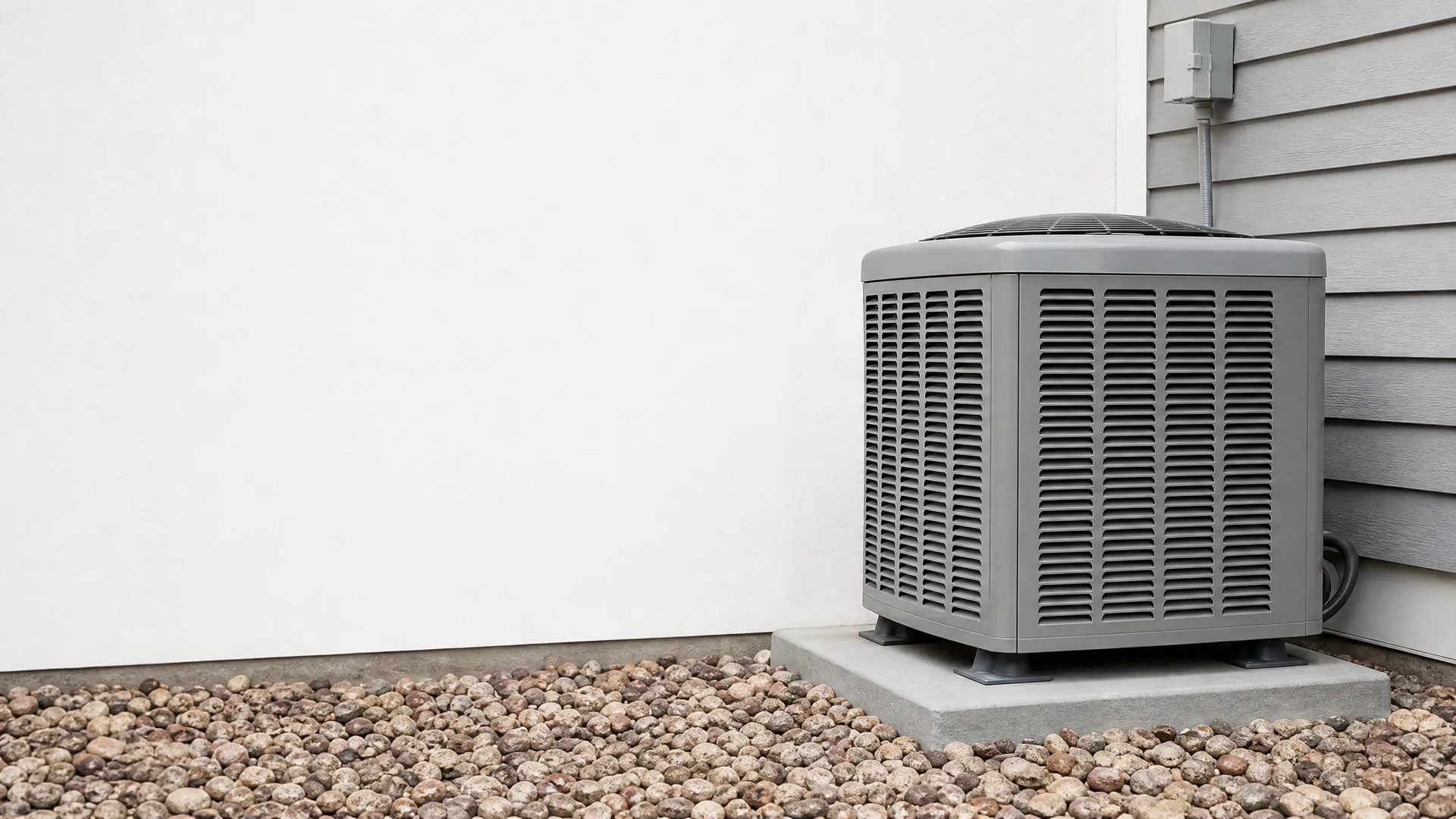
A gray outdoor air conditioning condenser unit sits on a concrete pad beside a white stucco wall and gray horizontal siding, surrounded by rounded landscaping gravel, with an electrical disconnect box mounted on the siding above.

Gas heat means the AC rests

Most homes here heat with gas, so the air conditioner sits unused from fall through early spring instead of running double duty like a heat pump would. That long rest lets dust settle on the contactor contacts and lets a fan guard loosen without anyone hearing it. The first hot week of the year is often when a buzz shows up, not because something broke suddenly, but because nothing's run it since last September.

A smiling man in a denim shirt and white t-shirt stands in an open dark doorway of a stucco house, facing a woman with long brown hair and a green jacket seen from behind in the foreground.

What that buzz means for your house

You notice the buzz because you're in the house with it, probably in the room closest to the unit outside. It's not loud enough to call an emergency over, so it keeps running while you decide whether it's worth the trouble. That's the part that costs you. A fan blade hitting a bent guard all day wears the motor mount faster than it would in an hour. A contactor buzzing on every cycle is arcing a little more each time it closes.

None of that shows up on your power bill in a way you'd catch early, not at Idaho's rates. What it shows up as is a bigger repair later, or a compressor that quits in August when you need the unit most. Sending in what you're hearing, the make of the unit, how old it is, gets you matched with a contractor who already knows what questions to ask before they show up. You stop carrying the problem of figuring it out yourself.

A gray upholstered sofa with a matching cushion sits beside a potted plant and a wooden table holding a small green plant in a stone pot, near a curtained window.
A two-story house with gray and light gray siding, white-trimmed windows and a white front door, flanked by deciduous trees, with a partly browned lawn in front under a clear blue sky.

Idaho's summer air sits at a dew point of 42°F, according to NOAA climate data, which is dry air by any measure. Dry air doesn't strain a compressor the way humid air does, but it does carry fine dust and grit straight through the condenser grille instead of settling in damp clumps near the ground. That grit lands on fan blades and motor mounts. A blade that's slightly out of balance from dust buildup buzzes different than a clean one, and you'll hear it change pitch as more collects. If your AC's buzz has gotten louder or steadier over the summer rather than staying the same, dry dust working into the moving parts is a reasonable place to start.

NASA POWER T2MDEW county cells weighted by homes

A bearded man in a blue and brown plaid flannel shirt stands indoors looking out a window at snow-covered trees, with a ceramic mug on the windowsill.
A man in a blue T-shirt sits on a light gray sofa, laughing while looking at an open laptop in the foreground, with a framed picture, lamp and potted plant behind him.

A buzz from your AC has a cause, whether it's a fan blade clipping a bent guard or a contactor starting to fail inside the cabinet. Some of that you can check yourself in a few minutes. The rest means power should stay off at the disconnect until someone who works on these units has looked at it, because a contactor or a seized motor won't fix itself by running longer. Idaho's dry summer heat means the unit runs most of the day for months, and whatever's causing the buzz is getting that same workout. Once you send the form, you're done hunting for who to call. A contractor who covers your area gets your details and reaches out, and from there it's their job to find the part that's buzzing and fix it, not yours.

Interior room corner with sunlight from a window, showing peeling paint and damaged plaster on the wall above a white baseboard, a wooden cabinet with a pale bowl on top, hardwood floor and a patterned rug.
Interior corner of a room with tan walls, white profiled baseboard and window trim, a wood-plank floor in sunlight, and green foliage visible through the window.
An empty room corner with cream walls, white baseboard, two windows with deep sills showing green foliage outside, and a wood plank floor lit by sunlight.
Empty room corner with beige walls, white beadboard wainscoting, chair rail and baseboard, a window with green foliage outside, and sunlight casting leaf shadows on the wall above a wood floor.
Sunlit room corner with a multi-pane window, beige walls, white baseboard, wood floor with a woven rug, and a dark wooden cabinet holding a ceramic table lamp below a framed picture.

A local pro for your air conditioner repair

Once you send the form, finding a pro is off your list.

Hand it over

You're not committing to anything by asking.