Profile view of a bearded man wearing a black baseball cap and a dark gray T-shirt against a plain light background.

Why your upstairs stays hot in Idaho summers

Step 1 of 3: Equipment

Heat rises, so the upstairs is always going to run warmer than the rest of the house. But if it's noticeably hotter up there, the real problem is usually that your air conditioner can't push enough cool air that far. Idaho summers are hot and dry, and the heat soaks into an upstairs through the roof all afternoon, while the ductwork feeding those rooms is often the longest run in the house and the last to get cold air. If your system is low on refrigerant, or the blower isn't moving enough air, downstairs gets comfortable first and upstairs never catches up. A dirty filter or a duct that's come loose in the attic makes it worse, since whatever air is left to cool the top floor gets weaker still. For a household trying to keep everyone comfortable through July and August, this usually means the upstairs bedrooms stay hot well past bedtime unless the system itself gets looked at.

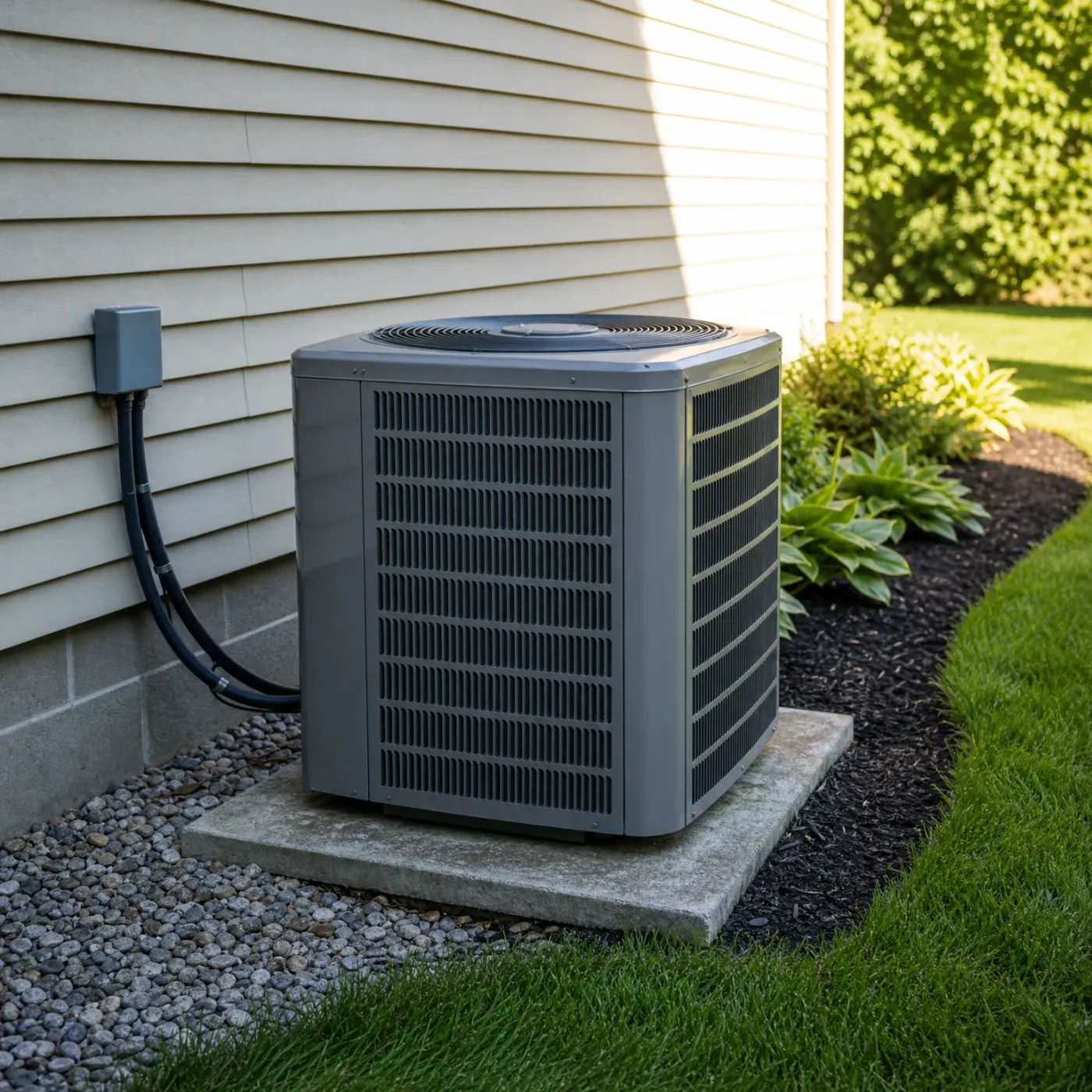
An outdoor air conditioner condenser unit on a concrete pad beside a house with light gray vinyl siding, with a gray electrical disconnect box and conduit on the wall, gravel beds and dried plants nearby, and a concrete sidewalk in the foreground.
Before you get your air conditioner repair
A gray outdoor air conditioning condenser unit on a concrete pad beside a house with horizontal siding and a stone veneer base, with a wall-mounted disconnect box and conduit, next to a shrub bed and a concrete patio.
After you get your air conditioner repair

Your air conditioner is built to cool the whole house, but the upstairs is working against it from the start. The duct feeding those rooms usually branches off last, so it gets whatever air is left after the rest of the house takes its share. The thermostat downstairs doesn't know that. Once it reads satisfied, the system shuts off, even if the upstairs never caught up. Add in a roof that's been taking on heat all day, with only insulation between the attic and the upstairs ceiling, and those rooms are fighting a load the downstairs never sees. The registers up there are often smaller and fewer too, so less air was ever meant to reach them. Any weakness in the system shows up worst in those rooms first. A weak blower, a loose duct joint in the attic, a dirty filter, a low refrigerant charge. All of it hits the far end of the house hardest. That's usually the upstairs in an Idaho home.

Why Upstairs Falls Behind

  • Your system is sized to cool the whole house evenly, and the upstairs return duct is often the last branch off the trunk line, so it gets whatever air pressure is left.
  • A single thermostat downstairs tells the whole system when to shut off, so it can satisfy that reading long before the upstairs rooms catch up.
  • Heat moves into the attic through the roof all day, and that attic sits right above the upstairs ceiling with only insulation between them.
  • If the blower motor is weak or a duct has come loose in the attic, the upstairs is the first place to lose airflow because it's farthest from the unit.
  • A dirty filter or a low refrigerant charge cuts cooling capacity everywhere, but the rooms farthest from the air handler feel it first and worst.
  • Supply registers upstairs are usually smaller and fewer than downstairs, so even a properly running system moves less air up there by design.
A gray-haired woman in a cream knit sweater stands in a dimly lit kitchen at night, looking to her right, with a round loaf of bread in the foreground and a dark window and potted plant behind her.
A woman with her hair in a bun holds a sleeping young child against her chest, both wrapped in a textured beige knit blanket on a sofa in a dimly lit room with a lamp, framed picture, and bookshelf behind them.
A gray outdoor air conditioning condenser unit on a concrete pad beside a house with horizontal lap siding, with a conduit and electrical disconnect box on the wall and a green shrub in mulch to the right.

Running right

A condenser like this one, sitting clean on its pad with the line set intact, is moving the refrigerant charge it needs to keep up with Idaho's dry heat. Airflow upstairs depends on this unit holding its charge and its coil staying clear.


A weathered outdoor air conditioner condenser unit on a concrete pad beside a house with horizontal vinyl siding, with a conduit and disconnect box on the wall to the right.

Falling behind

Dirt packed into the grille and leaves piled against the base choke the airflow this unit needs to shed heat. When it can't dump heat outside, it can't pull enough cool air through the house, and the upstairs feels it first.

A man seen from behind raises his hand to wave at a woman standing in the open front doorway of a single-story house with gray shingle siding, white columns and a gabled porch entry.

What a hot upstairs is doing to your house

You feel it first in the bedrooms. The thermostat downstairs might read 72, but upstairs is sitting at 80 or higher by late afternoon, and it stays that way until well after the sun goes down. Whoever sleeps up there is running a window fan or pushing the thermostat down to try to force more cold air up, and the unit runs longer for less result. That extra runtime wears on a system that's already working against dry Idaho heat all summer.

A local contractor who services air conditioners in your area has likely seen this exact layout before, the single thermostat downstairs, the upstairs return starved for airflow, and knows which of a handful of causes is usually behind it in homes built the way yours was. Getting matched with one contractor means someone looks at your actual ducts and your actual unit, not a guess over the phone, and you're not fielding calls from three different companies while you try to get an answer.

A gray upholstered sofa with a textured cushion sits beside a dark round side table holding a vase of green foliage, with a table lamp and sheer-curtained window behind.
  1. Cool air leaves the furnace through the main trunk line.

  2. The trunk splits into branch ducts for each floor.

  3. Upstairs branches run longer and lose pressure along the way.

  4. The blower has to push air further to reach the top floor.

Is it the ducts or the equipment

A duct problem

  • A duct problem stays put until someone opens up the system and finds the restriction, the leak, or the undersized branch run.
  • If the upstairs return is choked off or a duct joint has come loose in the attic, that's a repair to the ductwork, not the condenser outside.
  • Dampers in the trunk line can be adjusted to send more air upstairs, but only if they're there and someone sets them right.
  • An attic that gets brutal in Idaho's dry heat can push duct temperatures up enough to undo some of the cooling before it ever reaches a bedroom register.
  • This kind of fix often means a contractor tracing the line from the furnace to the upstairs vents to see where the air is actually going.

An equipment problem

  • An equipment problem shows up as weak airflow or warm air at every vent, not just the ones upstairs.
  • A dirty coil, a failing blower motor, or a low refrigerant charge cuts how much cool air the whole system can move, and the upstairs feels it worst because it's furthest from the furnace.
  • A single thermostat downstairs will shut the system off once that floor is satisfied, even if the top floor hasn't caught up yet.
  • If the condenser outside is short on charge, it doesn't matter how good the ductwork is, there isn't enough cold air being made in the first place.
  • This kind of fix means a contractor checking the charge, the coil, and the blower before ever touching a duct.
A gray outdoor air conditioner condenser unit on a concrete pad beside a house with horizontal lap siding, with a wall-mounted disconnect box and conduit at left and a green shrub and mulch bed at right.

Working like it should

This condenser sits clean on its pad, conduit running down from the disconnect to the unit without any strain on the connection. Mulch and shrubs are trimmed back so air moves freely through the coil. When the coil can breathe like this, the system holds its charge and keeps pushing cool air all the way to the upstairs rooms.

An outdoor air conditioner condenser unit on a concrete pad beside a house with horizontal lap siding, with a conduit running to a gray electrical disconnect box on the wall.

Struggling to keep up

Nothing here looks obviously broken, and that's the problem. The unit sits against the siding doing its job, but if the coil inside is dirty or the charge has dropped, it's moving less air than your upstairs needs. You won't see the shortfall outside. You'll feel it in the bedrooms by mid-afternoon.

A woman with long wavy brown hair in a grey ribbed sweater sits on a couch indoors, looking toward a window, with a potted palm-like plant and fireplace behind her.
A woman with long brown hair wearing a green V-neck top and beige cardigan sits on a light sofa, looking off to the side, with a dining table, lamp and framed picture in the background.
A woman with long dark hair in a cream knit sweater sits on a beige sofa indoors, looking toward a bright window with a houseplant and framed picture in the background.
A woman with long dark hair in a green knit sweater sits on a couch indoors, smiling and looking toward a window with a blurred room behind her.
A gray outdoor air conditioner condenser unit on a concrete pad beside a house with horizontal siding and a stone veneer foundation, surrounded by mulch, ornamental grasses, and shrubs, with a conduit and disconnect box on the wall.

A local pro for your air conditioner repair

Your request stays with one local pro.

A local pro who knows air conditioners gets your details and gets in touch.

Find an air conditioner pro

There's no charge for the request.

A gray outdoor air conditioning condenser unit on a concrete pad beside a house with horizontal lap siding, with a wall-mounted disconnect box and conduit, and shrubs to the left.
This unit has clear airflow on all sides, and the coil fins behind the grille aren't caked with debris, so it can move the refrigerant charge Idaho's dry heat demands.
An outdoor air conditioning condenser unit on a concrete pad beside a house with horizontal siding and a concrete foundation, with dry brown leaves on the ground to either side.
Leaves and grime have packed into the coil here, and dirt like that chokes airflow across it, which shows up first as a hot upstairs that won't cool down.
A two-story gray horizontal-siding house with multiple gables, a covered front porch with white columns and railing, and a dark front door, fronted by a patchy green and brown lawn under a clear blue sky.

The air outside in Idaho is dry, with a summer dew point averaging 42°F across June, July and August, according to NOAA climate data. Dry air gives your air conditioner an easier time shedding heat at the coil than it would have in a humid state, since it isn't spending capacity wringing moisture out of the air first. That's useful downstairs, where the thermostat sits. But it doesn't help the upstairs rooms getting the weakest airflow, because the problem there isn't moisture, it's getting enough air that far through the ducts. Dry heat still needs to move, and a duct restriction or a weak blower won't fix itself just because the air is dry.

NASA POWER T2MDEW county cells weighted by homes

Why does the upstairs stay hot no matter what you set the thermostat to

You check the thermostat downstairs and it says 72, so you go upstairs expecting the same and it's not even close. The air coming out of the vents feels weak, maybe not cold at all, and by afternoon the bedrooms are sitting well above anything you set. Running the fan longer doesn't help much, and neither does shutting vents downstairs to force air up. If the upstairs return is blocked or the coil outside is dirty, the system ends up running longer to chase a temperature it can't reach, which wears on the compressor and shows up on your power bill even with Idaho's cheaper rates. Whoever sleeps up there is the one who feels this every night.

An outdoor air conditioner condenser unit on a concrete pad beside a house wall, with a gray electrical disconnect box and conduit above it and grass in the foreground.

What a low charge does to airflow

Refrigerant carries the heat out of your house, and the blower only moves air, it doesn't cool it on its own. If the charge is low from a slow leak, the coil can frost up even in Idaho's dry summer heat. A frosted coil blocks airflow instead of helping it, and whatever air does get through has to travel the farthest to reach the upstairs rooms.

A gray outdoor air conditioner condenser unit on a concrete pad beside a house with horizontal lap siding, surrounded by white gravel and a lawn, with a white wall at left.

Why the farthest room suffers most

Static pressure drops the further air travels through a duct, so the upstairs vents are working against more resistance than the ones downstairs. A system that's low on charge or has a dirty coil loses capacity everywhere, but you feel it first at the end of the line. That's usually the upstairs bedroom furthest from the furnace, not the one next to the stairs.

Power costs 11.83 cents per kilowatt-hour statewide

At 11.83 cents a kilowatt-hour, running your air conditioner harder to fight a hot upstairs doesn't wreck your bill the way it would somewhere like California. That's good news, but it also means a weak unit can limp along for a long time without you noticing in the bill what you already feel in the bedrooms.

EIA-861 2025 statewide residential average

Where That Leaves Your Upstairs

  • A hot upstairs almost always traces back to airflow, whether that's duct pressure loss, a dirty coil, or a system running low on charge.
  • Idaho's dry summer air means the refrigerant charge matters more than the humidity, so a slow leak shows up as weak cooling before it shows up as a bigger bill.
  • The fix depends on finding which part of the system is actually losing ground between the furnace and the upstairs vents.
  • A local contractor who services Idaho systems all summer has seen which branch runs and which coils tend to fail first in homes built like yours.
  • Working with one licensed contractor means one visit, one diagnosis, and no juggling calls from several companies trying to win the job.
  • Once the restriction or the leak is found, the upstairs can cool the same way the rest of the house does.

A hot upstairs isn't a mystery, it's airflow that gave out somewhere between the furnace and the vent in the room where someone's trying to sleep. Idaho's dry air makes that easier to track down than it would be somewhere humid, because a weak charge shows up as warm rooms long before it shows up on your power bill at 11.83 cents a kilowatt-hour. Somewhere in that system, whether it's a duct branch losing pressure, a coil packed with debris, or a slow refrigerant leak, something is losing the fight to push cool air up to the second floor. Finding which one it is means opening up the system, not guessing from the thermostat.

That's the kind of work that goes faster with someone who already knows what tends to fail in homes around here, because they've been inside this same system dozens of times this summer alone. A contractor who services Idaho air conditioners all season has a good sense of which branch runs lose pressure first and which coils clog fastest in houses built the way yours was. You'd be matched with one licensed local contractor, not a handful of companies competing for the job, so there's one visit and one diagnosis instead of a string of calls to sort through.

Once that contractor finds where the system is losing ground, whether it's a restriction in the ductwork or a leak slowly draining the charge, the fix is specific to that part. The upstairs doesn't need a different system or a different thermostat setting. It needs the one thing that's actually holding it back fixed, so it cools the same way the rest of the house already does.

A gray outdoor air conditioning condenser unit on a concrete pad beside a house with light horizontal siding, with gravel, dark mulch, shrubs and lawn nearby and a conduit box on the wall.

Get the right pro for your air conditioner

Get a local pro

Your request goes to one pro, not a list of companies.

You only hire the pro if you want to.